
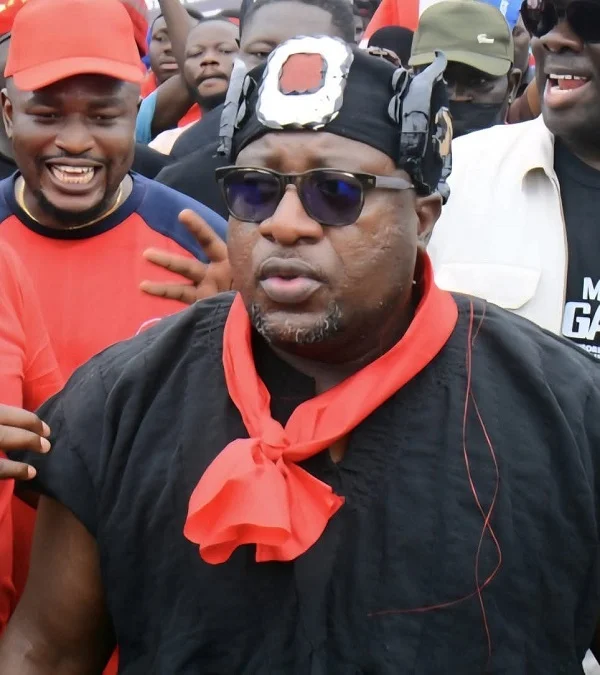
The New Patriotic Party (NPP) appears to have opened a fresh chapter in Ghana’s political debate over public accountability, following its sustained criticism of the National Democratic Congress (NDC) government over the recent evacuation of Ghanaians from South Africa.
But beneath the political exchanges lies a fundamental question: Does the NPP have an unblemished record on emergency evacuations to justify the intensity of its demands, or is the current controversy gradually becoming another battleground in the political rivalry between the two parties?
Interestingly, the latest controversy has revived memories of three major evacuation exercises undertaken under the administration of former President Nana Addo Dankwa Akufo-Addo: the COVID-19 evacuation in 2020, the Russia-Ukraine crisis evacuation in 2022 and the Sudan evacuation in 2023.
All three operations involved the use of public resources to bring distressed Ghanaians home from foreign jurisdictions.
Yet, as the NPP Minority in Parliament intensifies its scrutiny of the GH¢49.72 million reportedly spent by the current government to evacuate 1,964 Ghanaians from South Africa, questions are emerging about whether the same level of scrutiny was applied to the previous administration’s evacuation exercises.
THE NPP’S THREE EVACUATION EXERCISES
In 2020, the Akufo-Addo government launched its Operation Return Home programme following the outbreak of the COVID-19 pandemic and the closure of international borders.
The programme eventually brought home 10,025 Ghanaians between May 23 and September 18, 2020.
Then Foreign Affairs Minister Shirley Ayorkor Botchwey told Parliament in July 2021 that government had spent GH¢44.46 million on quarantine arrangements in 85 hotels, in addition to expenditure on airfare and other logistical arrangements.
The figures were substantial, particularly considering that some returning Ghanaians were required to bear part or all of their quarantine expenses.
Indeed, the expenditure raised questions about the cost of emergency accommodation, procurement arrangements and the overall management of the programme.
In March 2022, another international crisis confronted the Akufo-Addo administration when Russia invaded Ukraine, placing thousands of foreign nationals, including Ghanaian students, in precarious circumstances.
Ghana subsequently organised an evacuation operation through neighbouring countries, including Poland, Romania and Hungary, with the Ministry of Foreign Affairs coordinating the movement of stranded nationals.
By March 8, 2022, the Ministry had announced that 181 Ghanaians had been evacuated.
The third major operation occurred in April 2023 following the outbreak of armed conflict in Sudan.
Once again, Ghanaian nationals, including students and other residents, found themselves caught in a dangerous situation, compelling the government to organise their evacuation through neighbouring countries.
These three operations represented significant consular responsibilities undertaken by the NPP government.
However, publicly available information does not provide a complete, independently audited financial breakdown of all three exercises. This is precisely why the latest decision to subject them to an independent audit is significant.
ENTER THE NDC AND THE SOUTH AFRICA EVACUATION
Fast-forward to 2026, and the Mahama administration has found itself confronting another international emergency following renewed xenophobic attacks and intimidation against foreign nationals in South Africa.
The government, through the Foreign Affairs Ministry under Samuel Okudzeto Ablakwa, organised the evacuation of 1,964 Ghanaians between May 27 and September 4, 2026.
The operation reportedly cost GH¢49,721,786, comprising GH¢33.72 million in direct government funding and GH¢16 million contributed by Engineers and Planners Limited.
Beyond the transportation arrangements, the government announced GH¢5,000 reintegration grants and GH¢500 transport allowances for each returnee, alongside medical assistance, health insurance registration and other support measures.
It is this expenditure that has attracted the attention of the NPP Minority, which has raised questions about alleged discrepancies in passenger records, allowances, flight documentation and other financial transactions.
The Minority has called for an independent audit, arguing that some aspects of the expenditure require further reconciliation.
The Majority, however, insists that the Ministry has provided extensive documentation and that the expenditure is fully accounted for.
The controversy has consequently moved beyond the evacuation itself into a wider political argument about transparency, public expenditure and the standards expected of successive governments.
WHY THE DOUBLE-STANDARD QUESTION?
The question confronting the NPP is not whether Parliament should scrutinise the South Africa evacuation. Indeed, parliamentary oversight is a constitutional responsibility, and no government should be exempted from accountability simply because its actions were undertaken in an emergency.
Rather, the issue is whether that principle should apply selectively.
If the GH¢49.72 million spent on the South Africa operation deserves parliamentary and independent scrutiny, should the same standard not apply to the COVID-19, Ukraine and Sudan evacuations?
Should the GH¢44.46 million spent on quarantine arrangements during the COVID-19 operation not receive the same level of examination?
And what were the total financial implications of the Ukraine and Sudan exercises?
These are legitimate questions that deserve answers, irrespective of which political party was in government when the expenditure occurred.
It is against this background that Ablakwa’s decision to invite the Auditor-General to undertake a special audit of evacuation exercises dating back to 2017 becomes particularly important.
The proposed audit is expected to examine the COVID-19, Ukraine, Sudan and South Africa operations, among others, and provide an independent assessment of their respective costs, administrative arrangements and financial records.
The Ministry has also submitted a report exceeding 200 pages in response to the Minority’s Right to Information request concerning the South Africa operation.
This development provides an opportunity to move the discussion away from political accusations and towards verifiable records.
ACCOUNTABILITY MUST NOT HAVE A PARTY COLOUR
Ultimately, the evacuation controversy presents Ghana with an opportunity to establish a consistent standard for the management of public resources during emergencies.
The NPP is entitled to demand answers from the Mahama administration. Equally, the NDC government cannot use the previous administration’s record as an excuse to avoid scrutiny.
But the reverse must also hold true.
The three evacuation exercises under Akufo-Addo must receive the same independent examination being demanded of the South Africa operation.
If the Auditor-General’s review establishes financial irregularities, administrative weaknesses or value-for-money concerns, the findings must be made public and appropriate action taken.
Equally, if the South Africa operation withstands independent scrutiny, its critics must be prepared to accept the findings.
Ghana cannot afford a situation where accountability becomes a weapon deployed against political opponents while similar questions concerning one’s own administration are conveniently forgotten.
The real test, therefore, is not which political party wins the evacuation argument.
It is whether the country can finally establish that public money spent bringing distressed Ghanaians home is accounted for, properly managed and subjected to the same standards regardless of who occupies Jubilee House.
After all, the safety of Ghanaian citizens abroad should never be a partisan privilege, and accountability should never be a political punishment