
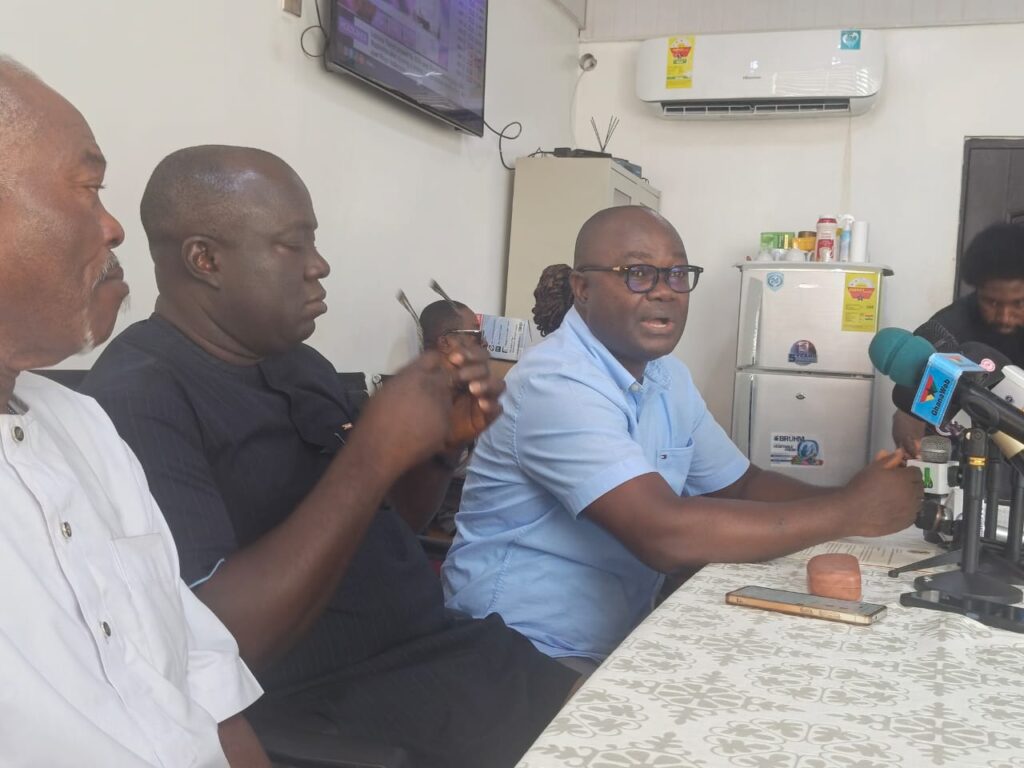
The Traders Advocacy Group Ghana (TAGG) has called on the government to urgently review what it describes as excessive and unjustifiable charges imposed on traders and importers at the country’s ports.
According to the group, Ghanaian businesses have endured the additional financial burden for nearly two years despite several engagements with the relevant authorities to find a solution.
TAGG said it was particularly concerned about the increase in an administrative charge imposed by shipping lines from GH¢550 to GH¢720, after it understood that GH¢550 had been agreed upon following consultations between stakeholders and the Ghana Shippers Authority (GSA).
In a press statement issued on Tuesday, September 1, 2026, the group demanded answers as to who authorised the increase, why it was necessary and whose interest the decision served.
“Enough is enough,” the group declared, insisting that traders could no longer continue absorb what it described as excessive costs which eventually translated into higher prices for consumers.
Cost of doing business.
TAGG said although it had no objection to legitimate import duties and lawful taxes payable to the state, it was opposed to charges it considered excessive and inconsistent with efforts to reduce the cost of doing business in Ghana.
It said government could not simultaneously promise businesses relief from high operating costs while allowing additional burdens to be imposed on traders and importers.
The group argued that businesses had limited capacity to absorb continuous increases in operational costs, warning that any additional charges at the ports would eventually be reflected in the prices of imported goods.
It therefore urged consumers to look beyond the prices quoted by traders and consider the various charges imposed at the ports, administrative fees and shipping-related levies that contribute to the final cost of goods.
TAGG challenges shipping lines
The group also took issue with attempts to justify some of the charges on the basis that reducing them could affect jobs at shipping companies.
While acknowledging the importance of protecting jobs, TAGG said the welfare of workers should not be used as a justification for imposing what it described as unjustified costs on traders, importers and consumers.
It stressed that all companies operating in Ghana were required to comply with the country’s laws, regulations and lawful directives.
“No commercial interest should allowed to operate above the laws of Ghana or hold the Ghanaian economy hostage,” the group stated.
*Call for government intervention*
TAGG consequently called on the President and the government to intervene immediately and ensure a review of excessive port charges.
It further urged the Ministry of Transport to enforce the law and demonstrate decisive leadership in protecting Ghanaian businesses.
The group also called on the GSA to stand firmly by its mandate and protect the interests of Ghanaian shippers, while urging shipping lines to respect Ghana’s laws, regulations and lawful directives.
TAGG said traders had become frustrated with what it described as endless meetings and promises without concrete action.
“We are tired of endless meetings. We are tired of promises. We are tired of being told to wait. We want action,” it said.
Transport crisis
Beyond the port charges, TAGG raised concerns about what it described as a broader transportation crisis affecting traders, workers and commuters.
It said thousands of people were stranded daily, particularly between 4 p.m. and 8 p.m., at markets and transport terminals as they struggled to secure vehicles to return home after work.
The group said it had earlier submitted a proposal to the Presidency to help address the shortage of commercial vehicles.
The proposal, which was subsequently forwarded to the Ministry of Transport, included a call for a 50 per cent reduction in import duties on commercial vehicles for a specified period to encourage private investment and increase the number of commercial vehicles on the roads.
TAGG, however, said despite the seriousness of the situation, meaningful action on the proposal was yet to be taken.
‘Public office demands results’
The group also questioned the performance of the Minister for Transport, describing him as incompetent over what it considered his failure to adequately address persistent transportation challenges affecting Ghanaian traders and workers.
TAGG said its description of the Minister was based on what it considered a continued failure to deal effectively with the challenges confronting the sector.
It maintained that public office demanded results and not excuses, and therefore called for the competence and performance of government appointees to be seriously assessed when persistent problems continued to affect the livelihoods of citizens.
TAGG said the ultimate burden of the unresolved challenges would fall on ordinary Ghanaians through increased prices of goods and services.
It consequently urged the government and regulatory authorities to act to protect consumers, traders and importers.
The statement was signed by the President of TAGG, David Kwadwo Amoateng, and the General Secretary, Nana Poku.