
By Richard Dablah
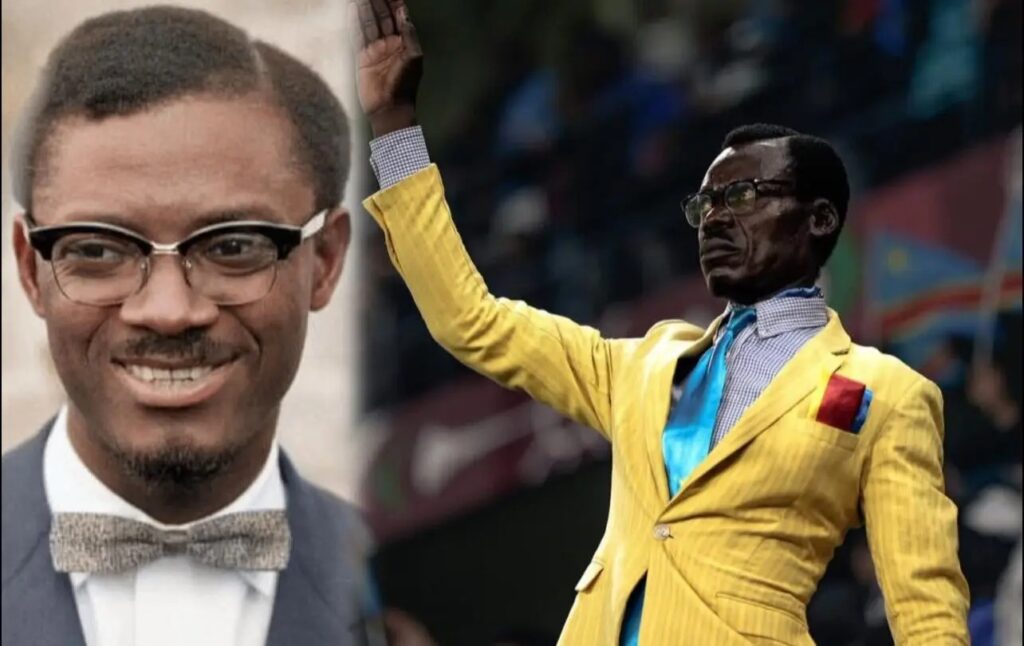
During the recent Africa Cup of Nations, a brief visual interruption—easy to miss between chants, substitutions, and advertising—returned Patrice Lumumba to public view. It was not announced. It was not explained. It was not framed as pedagogy. Lumumba appeared as memory intruding into spectacle. Football, Africa’s most functional mass institution, performed an act that archives, conferences, and official commemorations have failed to sustain: it returned Lumumba to circulation.
That interruption matters.
Lumumba has long been managed into safety. In European historical writing, he is preserved as a Cold War disturbance—volatile, unschooled, tragically outmatched by geopolitics. In much of Africa, he survives as an icon: printed on banners, quoted on anniversaries, invoked whenever moral gravity is required, then carefully set aside when contracts are signed, security agreements renewed, and budgets aligned with external comfort. Both treatments render him inert. Both strip him of his real danger.
What AFCON revealed—almost accidentally—was a Lumumba who is neither historical residue nor symbolic ancestor, but unfinished instruction. Not a saint. Not a blueprint. A problem that was removed rather than resolved.
*The Persistent Misdiagnosis*
The enduring error in the Lumumba story is the belief that he was killed because of what he said. The independence speech of June 30, 1960 is endlessly replayed, analysed, and mythologised. His refusal to flatter Belgium, his naming of colonial brutality, his breach of protocol—these moments are presented as the fatal provocation.
They were not.
Power tolerates rhetoric. History is crowded with fiery speeches that produced no assassinations. What power cannot tolerate is interference with procedure. Lumumba’s threat lay not in his language but in his refusal to accept the operating grammar of postcolonial governance already being quietly negotiated.
Independence was designed to be cosmetic sovereignty layered atop intact systems of extraction. Flags would change. Faces would Africanise. But mines would continue answering to foreign boards. Currency regimes would remain externally anchored. Armies would be retrained, not reimagined. The state would speak dignity while practising dependency.
Lumumba rejected this arrangement.
He treated independence as an audit.
Who controls the army’s loyalty?
Who sets mineral prices?
Who decides which regions develop and which are sacrificed?
Who authorises force, credit, and logistics?
These were not philosophical provocations. They were administrative demands. Empires survive through routines, not speeches. Lumumba threatened the routines.
*Administrative Disobedience*
Lumumba committed a political offence rarely named: administrative disobedience. He refused the separation between symbolic authority and material command. He wanted sovereignty to function, not merely to appear.
He spoke to soldiers as citizens rather than instruments. This alone was an anomaly. Colonial armies were designed around distance—between officer and rank, force and polity. Lumumba collapsed that distance. He addressed the army as accountable to the people, not as a neutral apparatus.
He spoke to workers as owners of the future rather than as labour inputs. He treated dignity as a fiscal and institutional question, not a cultural abstraction. He refused to accept that mineral wealth could be politically irrelevant simply because it was administratively inconvenient.
This was intolerable.
Not because it was violent—Lumumba was not organising an armed uprising—but because it was contagious. Administrative courage spreads. Once one leader insists that contracts be reviewed, loyalties clarified, and chains of command subordinated to civilians, others may follow. Empires fear precedents more than rebels.
*Anomalies That Made Him Ungovernable**
Several anomalies rendered Lumumba incompatible with the postcolonial script.
*Temporal anomaly* : He rejected gradualism. He did not accept that dignity must be phased in after feasibility studies. Freedom, for him, was immediate or fraudulent. Delay, he understood, is power’s most reliable ally.
*Moral anomaly* : He treated ethics as structural rather than personal. Corruption was not merely individual failure but institutional design. This implicated systems, not just actors.
*Communicative anomaly* : He spoke horizontally to citizens rather than vertically to elites. He collapsed the distance between public speech and private policy. He refused the diplomatic habit of saying one thing publicly and another privately.
Institutional anomaly: He sought genuine civilian authority over the military, not rhetorical supremacy masking continued autonomy.
Each anomaly compounded the others. Together, they made Lumumba unmanageable.
*Enemies Made: External*
Lumumba’s external enemies were predictable.
Belgium viewed him as a direct threat to economic continuity, particularly in Katanga. Mining concessions depended on predictability. Lumumba introduced uncertainty and spoke of Congolese control not as a distant aspiration but as an immediate requirement.
The United States, operating within Cold War paranoia, interpreted Lumumba’s insistence on autonomy as ideological volatility. Neutrality was unacceptable. Refusal to align was read as latent hostility. His willingness to seek assistance wherever available was framed not as pragmatism but as ideological betrayal.
International institutions preferred leaders who mastered the choreography: radical speeches paired with conservative administration. Lumumba refused to reassure capital.
*Enemies Made: Internal*
More uncomfortable is the catalogue of enemies Lumumba made at home.
Regional elites feared centralisation. Provincial leaders feared redistribution. Officers feared loss of privilege. Clerks and administrators—many of whom had secured modest authority under colonial rule—feared flattening. Lumumba’s language of mass dignity threatened carefully maintained gradients.
A thin Congolese middle stratum had already reconciled itself to managing continuity. Independence, for them, meant inheritance, not transformation. Lumumba’s insistence on popular sovereignty endangered that inheritance.
Stability became the euphemism through which resistance to justice was expressed.
This pattern is not unique to Congo. Transformative politics rarely collapses under pressure from the poorest. It is more often neutralised by those who benefit marginally from the status quo and fear losing relative comfort.
Media as Infrastructure of Removal
Lumumba was not only confronted by soldiers and diplomats. He was confronted by headlines.
Western media coverage followed a disciplined pattern. Lumumba was framed not primarily as wrong, but as unstable. Not dangerous because of his programme, but because of his temperament. The vocabulary was consistent: “emotional,” “impulsive,” “erratic,” “volatile.” His speeches were “outbursts.” His refusal to accept tutelage was “immaturity.”
This was narrative conditioning.
By psychologising Lumumba, media avoided engaging his policies. Infantilisation made intervention appear paternal. Congo was framed as descending into chaos, and Lumumba became the chaos. Order, therefore, required his removal.
The most effective propaganda is not fabrication. It is emphasis.
His administrative demands—control over minerals, civilian authority, sovereignty without conditions—were marginalised. His personality was foregrounded. The political was reduced to psychology.
Radio, Silence, and Isolation
Inside Congo, media functioned differently but no less decisively. Radio was the battlefield. Control of transmission meant control of legitimacy.
Lumumba’s ability to speak directly to the population bypassed elite mediation. This flattening unsettled media elites trained within colonial frameworks. Once his access to media was constrained, his isolation accelerated.
Silence is not neutral. It is an act.
African Media: Constraint and Complicity
It would be comforting to place all blame on Western outlets. That comfort would be false.
Parts of the African press reproduced dominant frames—sometimes out of fear, sometimes alignment, sometimes lack of conceptual tools. Lumumba’s politics demanded a media ecosystem capable of explaining structural power. That ecosystem was still embryonic.
Where media lacks structural vocabulary, it defaults to personality. Lumumba became a character rather than an architect.
The Removal and Its JustificationLumumba’s assassination is often described as inevitable. This framing absolves agency. His removal required coordination, compliance, and justification.
The justification was ordeLumumba was framed as destabilising,
reckless, dangerous to unity. This language would become familiar across Africa in later decades. Stability would repeatedly be invoked to justify the removal of leaders whose crime was insisting that sovereignty be real.
Aftermath: Structural
The Congo that followed became a laboratory of managed disorder. Strongmen replaced accountability. Extraction intensified. Sovereignty fragmented. The state became an intermediary rather than an agent.
This pattern spread. Across Africa, governance settled into a recognisable form: elections without control, independence without autonomy, nationalism without redistribution. Lumumba’s absence made this arrangement easier.
Aftermath: Psychological
Lumumba’s assassination produced a political trauma that was never processed.
Leaders learned that courage without protection is fatal. Citizens learned that hope is dangerous. Institutions learned that obedience is rewarded.
A politics of caution emerged, disguised as realism. Leaders spoke boldly and governed timidly. Memory became ritual rather than reckoning.
Media After Death: Sanitisation
After Lumumba’s death, media entered a second phase: sanitisation. Responsibility blurred. Complexity was emphasised. Congo was framed as inherently ungovernable. Lumumba became tragedy rather than indictment.
In Africa, remembrance became ceremonial. His image survived; his programme dissolved.
This is how revolutions are buried politely: by allowing memory without instruction.
Digital Resurrection and Its Risk
Lumumba’s current resurgence through digital media marks a break. Gatekeeping has weakened. He circulates in fragments—quotes, images, reels.
But fragmentation carries danger. Algorithmic memory favours emotion over structure. Lumumba risks becoming aesthetic rather than analytical. A face without a programme. A slogan without an audit.
Why AFCON Cut Through
AFCON mattered because it bypassed editorial mediation. It did not explain Lumumba. It placed him inside competence.
Football is Africa’s most disciplined institution. It organises time, loyalty, money, borders, and emotion with a seriousness most parliaments fail to achieve. It exposes the lie that Africa lacks capacity.
Talent without structure fails. Charisma without coordination exits early.
Football performs Lumumba’s argument without words.
Why He Is Being Studied Again
The renewed interest in Lumumba is diagnostic, not nostalgic.
A generation is recognising that corruption is structural inheritance. That dependency is engineered. That leadership failure often consists of executing an unjust design efficiently.
Lumumba returns because he exposes the cost of administrative obedience.
The Unfinished Question
Lumumba leaves a question African politics still avoids:
What would governance look like if it were designed for dignity rather than manageability?
That question remains unanswered.
The structures he challenged persist, now dressed in patriotic language. Extractive economies continue with local branding. Security institutions remain insulated. Elections rotate personnel while preserving arrangements.
Collapse of Time
AFCON collapsed time. It placed Lumumba not behind us but among us—inside a present still running on the rails he tried to tear up.
Lumumba was not defeated by history. History was defended against him.
Until African politics develops the courage for administrative disobedience—and citizens willing to defend it beyond slogans—his ghost will remain restless.
In murals.
In chants.
In stadiums.
In moments when Africa remembers, accidentally, that liberation was never meant to be metaphorical.
MThe soup is thick.
The fire is still on.
*_Veritas non occiditur_* .