
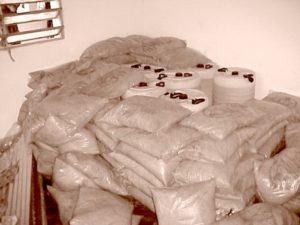
A major suspected international drug trafficking operation has been dealt a devastating blow after the Police intercepted nearly 900 parcels of suspected cocaine, allegedly concealed in sacks of gari and destined for export through the Tema Harbour.
The massive consignment, estimated to have a street value of almost US$7 million, was uncovered during an intelligence-led operation by the Regional Police Command.
The seizure has raised fresh concerns about the increasingly sophisticated methods allegedly being employed by drug traffickers to move narcotics through Ghana’s ports and onto international markets.
Rather than transporting the suspected cocaine openly, the traffickers allegedly attempted to camouflage the consignment among sacks of gari — an ordinary Ghanaian staple that would ordinarily attract little suspicion.
But the alleged deception failed.
Police intelligence and surveillance reportedly led investigators to the consignment before it could leave the country.
SECOND DRUG HAUL INTERCEPTED
While the cocaine seizure represents the biggest of the two operations, the Police also intercepted a taxi allegedly being used to transport sacks containing suspected Indian hemp at Tsopoli.
The interception followed a police pursuit, culminating in the arrest of the driver.
Four persons have so far been arrested in connection with the separate operations as investigators work to unravel the networks behind the suspected narcotics consignments.
POLICE BRIEFING
Briefing journalists, the Tema Regional Police Commander, DCOP Eric Asamoah Asiedu, issued a strong indication that the Police would not relent in the fight against drug trafficking.
He said the arrests demonstrated the Command’s commitment to intelligence-led policing designed to identify, disrupt and dismantle criminal networks involved in the trafficking of narcotic substances.
The latest seizures also expose the increasingly sophisticated lengths to which suspected drug traffickers are allegedly prepared to go to conceal narcotics.
The use of gari sacks as concealment for such a huge consignment is particularly disturbing, as it suggests that legitimate agricultural and commercial products could potentially be exploited as cover for international criminal operations.