
By: Seth Opoku Agyemang, Atronie
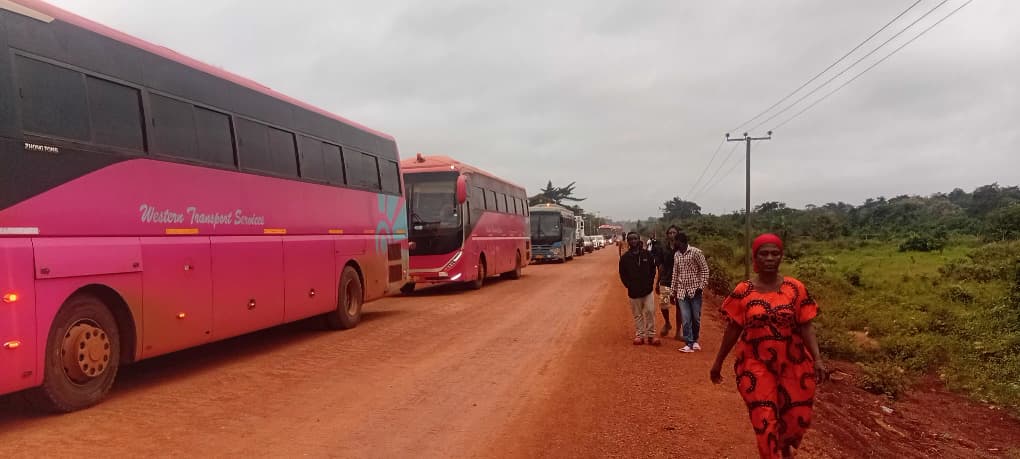
Chiefs and residents of Atronie in the Bono Region on Monday grounded buses and other vehicles transporting workers of Newmont Ghana from Sunyani to Kenyasi to make way for traditional rituals over the destruction of the Amoma River by illegal miners.
The Jegri Bekala Mining Company, based in Dormaa, is alleged to be owned by the son of the Dormaa-Hene, the prince belived to be behind the galamsay
The action left several Newmont workers stranded for almost four hours as the traditional exercise was conducted at the banks of the polluted river.
Military and police personnel who were escorting the Newmont buses were seen pleading with the chiefs to allow the vehicles to pass. The chiefs, however, insisted that the traditional exercise must be completed before the vehicles could continue their journey.
The exercise was led by the Chief of Atronie, Obrempong Diawusie Nana Amponsem Darko II, with traditional priests and other elders taking part.
Speaking to the people after the rituals, Nana Amponsem Darko II said the exercise was intended to seek spiritual protection and liberation for the people of Atronie from any calamity that could befall the community.
He said the chiefs and people were deeply concerned about the destruction of the Amoma River and the impact of illegal mining activities on the community.
The chief also said the rituals were meant to place a spiritual curse on some government officials whom the chiefs accused of failing to take effective action to stop illegal mining activities in the area.
The officials mentioned were the Bono Regional Minister, the Sunyani Municipal Chief Executive and the Member of Parliament for Sunyani East.
The chiefs also expressed anger over the deployment of security personnel to the area, claiming that the police were protecting illegal miners instead of stopping their activities.
According to the Atronie Traditional Council, several attempts had been made to engage the authorities, particularly the Bono Regional Minister, over illegal mining activities at Jinijini within the Atronie Traditional Area.
The chiefs alleged that despite their concerns, the authorities had failed to take the necessary steps to stop the destruction of the river and surrounding farmlands.
Nana Amponsem Darko II said the chiefs were disappointed in the government and accused the Regional Minister of failing to show the commitment needed to deal with illegal mining in the region.
He further alleged that the Minister had rather engaged in what he described as unnecessary blame games in the media while the destruction continued.
The chief said the situation was clear evidence, in his view, that the Regional Minister was not prepared to fight illegal mining in the region.
He described claims that the government was seriously fighting illegal mining as deceptive, insisting that the chiefs and people of Atronie would continue their struggle until the miners leave the area and the Amoma River is restored.
Farmers lose source of livelihood
The Assembly Member for the Atronie Electoral Area, Hon. Adu Richard, described the situation as extremely difficult for residents whose main source of livelihood is farming.
He said illegal mining activities at Jinijini had taken over several farmlands, depriving farmers of their means of survival.
According to him, communities and settlers along the Amoma River are also struggling to access clean water for household activities and farming.
He said the polluted river used to be an important source of water for the people, but its current condition has made it difficult for residents to use it safely.
Hon. Adu Richard said the concerns of the people had been communicated to the relevant authorities, but the community had yet to see the level of intervention needed to address the problem.
He warned that if illegal mining activities continue and polluted water is used to irrigate farms, crops could become contaminated and eventually enter the market.
He said this could pose a risk not only to farmers in the area but also to consumers who buy agricultural produce from the affected communities.
Traditional priest vows continued action
The traditional priest who performed the rituals, Apumosu Komfour Nana Akwasi Nyantakyi, also expressed disappointment over the handling of the illegal mining situation.
He criticised the Bono Regional Minister, the Sunyani Municipal Chief Executive and particularly the Sunyani East MP.
The priest said he had previously admired the MP for his humility before his election but claimed that his conduct since assuming office had left him disappointed.
He accused the political leaders of failing to live up to the expectations of the people and said the chiefs and residents would continue to fight against the destruction of the river and their farmlands.
He said the community would pursue both traditional and physical means to ensure that the illegal mining activities are stopped and that those responsible are held accountable.
The Atronie chiefs and residents have therefore renewed their call for urgent government intervention to stop illegal mining in the area, protect the Amoma River and restore the farmlands and water sources affected by the activities.Atronie Chiefs Ground Newmont Buses Over Amoma River Pollution
Sunyani, Bono Region — Chiefs and residents of Atronie in the Bono Region on Monday grounded buses and other vehicles transporting workers of Newmont Ghana from Sunyani to Kenyasi to make way for traditional rituals over the destruction of the Amoma River by alleged illegal miners.
The action left several Newmont workers stranded for almost four hours as the traditional exercise was conducted at the banks of the polluted river.
Military and police personnel who were escorting the Newmont buses were seen pleading with the chiefs to allow the vehicles to pass. The chiefs, however, insisted that the traditional exercise must be completed before the vehicles could continue their journey.
The exercise was led by the Chief of Atronie, Obrempong Diawusie Nana Amponsem Darko II, with traditional priests and other elders taking part.
Speaking to the people after the rituals, Nana Amponsem Darko II said the exercise was intended to seek spiritual protection and liberation for the people of Atronie from any calamity that could befall the community.
He said the chiefs and people were deeply concerned about the destruction of the Amoma River and the impact of illegal mining activities on the community.
The chief also said the rituals were meant to place a spiritual curse on some government officials whom the chiefs accused of failing to take effective action to stop illegal mining activities in the area.
The officials mentioned were the Bono Regional Minister, the Sunyani Municipal Chief Executive and the Member of Parliament for Sunyani East.
The chiefs also expressed anger over the deployment of security personnel to the area, claiming that the police were protecting illegal miners instead of stopping their activities.
According to the Atronie Traditional Council, several attempts had been made to engage the authorities, particularly the Bono Regional Minister, over illegal mining activities at Jinijini within the Atronie Traditional Area.
The chiefs alleged that despite their concerns, the authorities had failed to take the necessary steps to stop the destruction of the river and surrounding farmlands.
Nana Amponsem Darko II said the chiefs were disappointed in the government and accused the Regional Minister of failing to show the commitment needed to deal with illegal mining in the region.
He further alleged that the Minister had rather engaged in what he described as unnecessary blame games in the media while the destruction continued.
The chief said the situation was clear evidence, in his view, that the Regional Minister was not prepared to fight illegal mining in the region.
He described claims that the government was seriously fighting illegal mining as deceptive, insisting that the chiefs and people of Atronie would continue their struggle until the miners leave the area and the Amoma River is restored.
Farmers lose source of livelihood
The Assembly Member for the Atronie Electoral Area, Hon. Adu Richard, described the situation as extremely difficult for residents whose main source of livelihood is farming.
He said illegal mining activities at Jinijini had taken over several farmlands, depriving farmers of their means of survival.
According to him, communities and settlers along the Amoma River are also struggling to access clean water for household activities and farming.
He said the polluted river used to be an important source of water for the people, but its current condition has made it difficult for residents to use it safely.
Hon. Adu Richard said the concerns of the people had been communicated to the relevant authorities, but the community had yet to see the level of intervention needed to address the problem.
He warned that if illegal mining activities continue and polluted water is used to irrigate farms, crops could become contaminated and eventually enter the market.
He said this could pose a risk not only to farmers in the area but also to consumers who buy agricultural produce from the affected communities.
Traditional priest vows continued action
The traditional priest who performed the rituals, Apumosu Komfour Nana Akwasi Nyantakyi, also expressed disappointment over the handling of the illegal mining situation.
He criticised the Bono Regional Minister, the Sunyani Municipal Chief Executive and particularly the Sunyani East MP.
The priest said he had previously admired the MP for his humility before his election but claimed that his conduct since assuming office had left him disappointed.
He accused the political leaders of failing to live up to the expectations of the people and said the chiefs and residents would continue to fight against the destruction of the river and their farmlands.
He said the community would pursue both traditional and physical means to ensure that the illegal mining activities are stopped and that those responsible are held accountable.
The Atronie chiefs and residents are calling for urgent government intervention to stop the illegal mining in the area, protect the Amoma River and restore the farmlands and water sources affected by the activities.