
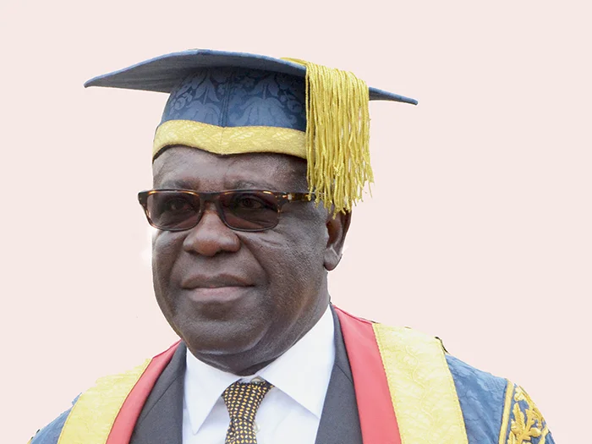
Ghana has turned Kwame Nkrumah into a national icon while failing to adequately teach and apply the ideas for which he stood, Chancellor of the University of Cape Coast (UCC), Sir Samuel Esson Jonah, has bemoaned.
Speaking at the opening of the 15th Kwame Nkrumah Memorial Lectures at UCC, last Thursday 17 September 2026, prior to the celebration of the 1st president’s birthday, Sir Sam Jonah said too many Ghanaian students could pass through the country’s education system knowing the date of Nkrumah’s overthrow and recognising his image but knowing little about his major intellectual works.
He cited Nkrumah’s Consciencism, Africa Must Unite and Neo-Colonialism: The Last Stage of Imperialism as works that should form part of the intellectual engagement with Ghana’s first President.
According to him, Nkrumah is studied as a thinker in some American universities while too many Ghanaian students encounter him primarily as a statue.
Sir Jonah, therefore, charged Ghanaian universities, particularly UCC, to go beyond commemorating Nkrumah and ensure that his ideas receive greater attention in the curriculum, cautioning that a nation that fails to teach its heroes could eventually cease to recognise their significance.
The Chancellor said the relevance of Nkrumah’s ideas had become particularly pronounced as Ghana confronts major questions about constitutionalism, national development and the future of Pan-Africanism.
He noted that the country was currently engaged in a major conversation over the 1992 Constitution, while continental questions about reparations and African unity had also returned strongly to public debate.
On development, Sir Jonah, said Nkrumah understood that political independence had to be backed by economic transformation. He pointed to projects including the Akosombo Dam, Tema, the motorway, Ghana Education Trust schools and universities as examples of the former President’s emphasis on building institutions and productive capacity.
“Independence without industry is a flag without a factory,” Sir Jonah declared, asserting that Ghana’s post-independence generations had spent too much time debating Nkrumah and not enough time replicating the development-oriented approach associated with his administration.
He also urged Ghanaians to approach Nkrumah’s constitutional record with historical context rather than caricature, acknowledging the controversy surrounding the Preventive Detention Act while pointing to the political violence and assassination attempts that confronted the First Republic.
On Pan-Africanism, Sir Jonah said Nkrumah’s vision that Ghana’s independence was linked to the liberation of Africa was gaining renewed relevance, pointing to the African Continental Free Trade Area and the growing international campaign for reparations as contemporary developments that echoed some of Nkrumah’s concerns.
He, however, challenged advocates of reparations to confront practical questions about what should be demanded, from whom and in what form, as well as what African countries would do with any resources secured. “Those are not hostile questions,” he said, arguing that they were the kind of hard questions Nkrumah himself would have asked.
Sir Jonah urged students not to approach the Nkrumah lectures simply as an exercise in hero worship or condemnation, but as an opportunity to engage seriously with the arguments surrounding Ghana’s constitutional order, development and Africa’s future.
“Tomorrow belongs to the students in this hall,” he said, insisting that what Nkrumah left behind was not merely a personality to celebrate, but “an argument worth having.”