
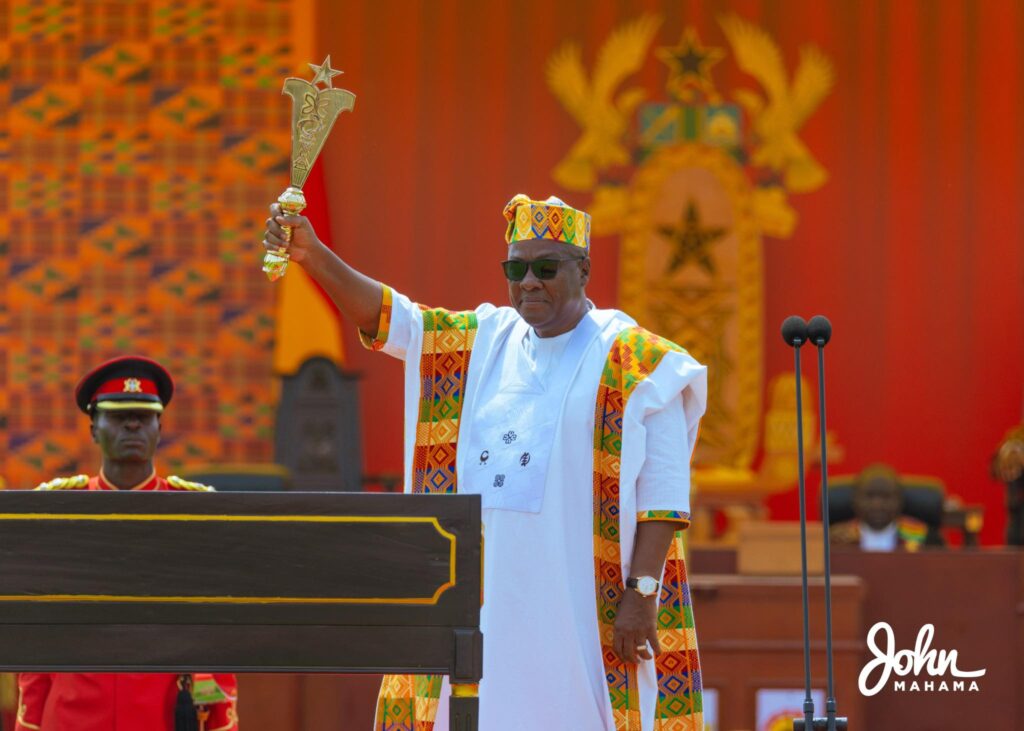
One year into President John Dramani Mahama’s return to office, Ghana’s economic conversation has shifted from survival to stabilization, and increasingly, to cautious recovery. While structural challenges remain, the broad set of economic indicators emerging from his first year in office suggest a government focused on restoring confidence, tightening fiscal discipline, and laying the groundwork for medium-term growth.
At the heart of this early performance is macroeconomic stability. Inflation, which had previously eroded household incomes and complicated business planning, has shown a sustained downward trend over the year. This easing of price pressures has been driven largely by coordinated fiscal restraint, improved monetary policy signalling, and relative exchange rate stability. For ordinary Ghanaians, slower inflation has translated into modest but meaningful relief in the cost of living, particularly for food and transport-related expenses.
The cedi’s performance has been another key signal. While not immune to external shocks, the local currency has been notably more stable compared to the extreme volatility of previous years. This stability reflects improved foreign exchange management, stronger export receipts—especially from gold and oil—and renewed confidence from both domestic and external investors. Currency stability has also helped businesses plan better and reduced the inflationary impact of imports, including fuel and industrial inputs.
On the fiscal front, the Mahama administration’s first year has been marked by a renewed emphasis on discipline. Budget deficits have narrowed, supported by expenditure rationalisation and enhanced revenue mobilisation. Tax administration reforms, particularly improvements in compliance and digital monitoring, have begun to yield results. While these measures have not been painless, they have helped rebuild credibility with development partners and financial markets.
Fuel prices have been a particularly sensitive barometer of economic management. Over the past year, pump prices have shown greater predictability, with periods of marginal reductions or slower upward adjustments compared to previous cycles. This relative moderation has been aided by currency stability, global oil price movements, and a more deliberate approach to energy sector cost management. Although fuel remains expensive for many households and transport operators, the reduced volatility has provided some relief for logistics, public transport, and small businesses that depend heavily on petroleum products.
Infrastructure delivery—especially road construction—has also featured prominently in the government’s first-year economic footprint. The resumption and acceleration of key road projects across urban and inter-regional corridors have supported employment in the construction sector and improved mobility for trade and commerce. While concerns about financing and value for money persist, improved road networks have reduced travel times, lowered vehicle operating costs, and strengthened market access for farmers and traders, reinforcing the broader recovery narrative.
Beyond the headline indicators, growth has begun to reassert itself, supported by improved performance in extractives, agriculture, and services. Investor sentiment, while cautious, has improved, reflected in renewed project announcements and a gradual return of private capital. Consumer confidence, though still fragile, has benefited from reduced inflationary pressure and relative price stability.
That said, the gains of the first year remain fragile. Youth unemployment, public debt sustainability, and income inequality continue to pose significant risks. Sustaining progress will require consistency, transparency, and careful balancing of social protection with fiscal restraint.
In sum, President Mahama’s first year back in office has been less about dramatic breakthroughs and more about economic repair. The indicators point to stabilization, early recovery, and renewed confidence rather than full transformation. Whether these gains translate into broad-based prosperity will depend on how firmly the administration consolidates stability, deepens structural reforms, and delivers tangible improvements in the daily lives of Ghanaians in the years ahead.
Source: oneseriouscall@gmail.com