
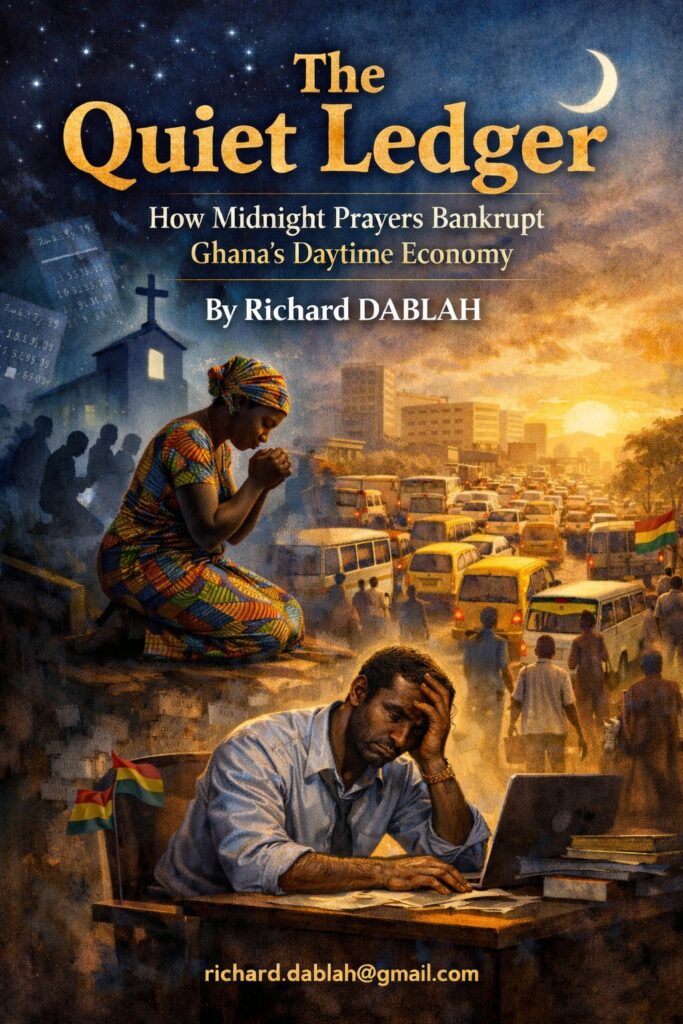
By Richard DABLAH
( richard.dablah@gmail.com)
There is a quiet ledger this country keeps, one no auditor signs and no pastor reads aloud. It sits somewhere between the altar and the payroll office, between the civil service code and the church WhatsApp group. Its entries are not cedis alone but hours, energy, sleep, attention, and the slow erosion of joy.
We quote “ _Render unto Caesar_ ” with ease. We invoke it to justify obedience, order, and structure. Yet we forget its dangerous twin: give _God what is God’s_ . Somewhere along the way, we fused the two into a moral loophole. We learned how to rob one in the name of the other.
During official working hours, prayer algorithms run quietly in the background. Mid-morning devotion replaces inspection rounds. Committee meetings are missed and baptized with scripture. Salaries are drawn in full. This is not faith; it is double-entry hypocrisy, a theology that balances the books only because no one dares audit the altar.
But that is only half the story. The harder truth, the one we rarely admit because it demands mercy, is this: many are not cheating the system. They are breaking themselves for it.
We pray through the night in Ghana. Midnight prayer lines hum like a second national grid. From 12 a.m. to 3 a.m., eyes burn, backs ache, phones glow. We are taught that rest is spiritual vulnerability, that sleep is when the enemy strikes. So we bind, loose, decree, warfare our way through the hours meant for repair. At dawn, we rise hollowed out, then pour our exhausted bodies into traffic that stretches patience into prayer. Two hours. Three. Engines idle. Minds dull.
By the time we reach the office, the day has already defeated us.
Productivity falls, not from moral failure but neurological fatigue. Tempers shorten. Creativity thins. Focus fractures. And beneath it all, a quiet depression settles in, unnamed because sadness does not fit our theology of victory. We blame individuals for underperformance while refusing to examine the system that sanctifies exhaustion and calls it discipline.
This is not laziness. It is the *spiritualization of burnout.*
Economically, this is catastrophic. Labour is not just time present; it is attention, clarity, energy. When churches normalize all-night prayer as a routine obligation, they quietly drain cognitive capital from the public sphere. Civil servants miss deadlines not always because they are corrupt, but because they are depleted. Nurses snap not from faithlessness, but from sleep deprivation. Teachers disengage not from sin, but from sadness they have been trained to pray away.
This is how theology leaks into macroeconomics. A nation cannot grow on vigils alone. GDP does not rise on insomnia. Public institutions cannot function on bodies denied rest. The Sabbath was not a poetic suggestion; it was an economic commandment. Even God stopped.
And yet, we inverted the logic. Rest became weakness. Sleep became compromise. To be awake while others slept became moral superiority. The result is not revival but resentment, not holiness but institutional fragility.
There is cruelty here, though it rarely announces itself. Pastors accumulate moral authority while outsourcing the cost to congregants’ mental health. Public institutions absorb inefficiency without explanation. Individuals internalize the blame, believing they lack faith rather than acknowledging fatigue. Depression becomes private shame instead of structural consequence.
Still, compassion must temper critique. Many are not stealing time from work; they are offering time they do not have to a God they fear disappointing. Prayer becomes a coping mechanism in a country where social safety nets are thin, traffic is brutal, wages are fragile, and hope often feels like something you must fight for at midnight.
But coping mechanisms can become cages.
A mature faith would tell the truth gently but firmly: God is not honoured by a broken nervous system. The altar does not require insomnia. A theology that produces depression at scale is not warfare; it is miseducation. Rendering unto God includes caring for the vessel that must report to work in the morning. Rendering unto Caesar includes honest labour, not exhausted presence.
Until we relearn this, we will keep praying all night, crawling through traffic at dawn, underperforming by afternoon, and blaming ourselves for what is, at root, a collective theological error.
The books will balance.
They always do.
The question is who keeps paying the interest.
*— Richard DABLAH*