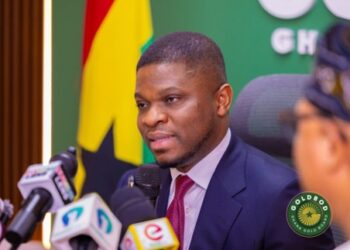

CHARLES OWUSU JUANAH, ESQ.
A CHRISTIAN, A CONCERNED CITIZEN OF THE REPUBLIC OF GHANA
AND A LAWYER OF THE NATIONAL CATHEDRAL
THURSDAY, JULY 24, 2025, | ACCRA, GHANA

INTERNATIONAL PRESS CENTER
REAFFIRMING THE INTEGRITY OF THE NATIONAL CATHEDRAL
PROJECT AND ITS COMMITTEE MEMBERS
PRESS CONFERENCE – OPENING STATEMENT
“Why should the nations say, ‘Where is their God?’” – Psalm 79:10
“Let us rise up and build.” – Nehemiah 2:18
Fellow Christians, brothers and sisters of other religions, citizens of Ghana, and members of the press,
We gather today at a defining moment, not only for the National Cathedral but for the soul of our nation. What began as a sacred vision to honour the
Lord and unite the Body of Christ in Ghana has now been twisted, questioned, and politicized. But the question before us is not merely political; it is spiritual.
Shall we let the world mock and say, “Where is their God?” Shall we allow disunity, betrayal, and selfish ambition to profane what was intended as a national altar to the Most High?
No. Like Nehemiah, we declare: Let us rise and build.
Like Gideon, we cry: A sword for the Lord and for His Christ!
This is not the time to retreat. This is the time to stand. To build. To preserve the honour of our Lord Jesus Christ, and to ensure that future generations will know that when the moment came, the Church in Ghana did not falter.
Today, I stand before You NOT as Counsel to the National Cathedral
Board, but as a strong and passionate Ghanaian Christian, to defend the integrity of this sacred mission, and to call this nation, especially its leaders and believers; back to righteousness, unity, and purpose.
Let this day mark not the defeat of faith by politics, but the rising of a people who fear God and will not be ashamed of His name.
Amen.
- LEGITIMACY, PURPOSE, ORIGIN, AND AUTONOMY OF THE
NATIONAL CATHEDRAL BOARD OF TRUSTEES
Before delving into the legal foundations of the National Cathedral Board of
Trustees, it is essential to reaffirm that this project was not born of political whim, but of a solemn spiritual pledge. In 2016, then-candidate Nana Addo Dankwa Akufo-Addo publicly declared that if the Almighty granted him electoral victory, he would build a National Cathedral “to honour God” and offer thanksgiving on behalf of the nation. Upon assuming office, President
Akufo-Addo took decisive steps to fulfill that vow: he personally donated seed funding, unveiled Sir David Adjaye’s iconic architectural design in
2018, and mobilized national and international support for what he consistently described as a project “to the glory of God.”
The spiritual mandate having been firmly laid, let us now turn to the legal foundation and governance structure that have underpinned the National Cathedral from its inception.
The National Cathedral Board of Trustees was formally inaugurated on
March 13, 2017, by President Akufo-Addo, with the express purpose of overseeing and managing the development of the Cathedral. This body was not designed as a political appendage but as an independent, faith-led initiative to fulfill a national spiritual vision, a vision of unity, thanksgiving, and renewal for the Christian majority and all citizens of Ghana.
Crucially, even before the Board’s formal inauguration, President Akufo-
Addo had already made several foundational decisions, including:
- LAND: Selection of a central and symbolic site in Accra for the project.
- ARCHITECT: Appointment of world-renowned architect Sir David Adjaye, whose visionary design has received global acclaim.
- SCOPE: Definition of the Cathedral as a National Monument; not merely a place of worship, but a cultural, religious, and heritage edifice, with an estimated project cost of $250 million.
These decisions reflect the foresight and strategic planning of the
President, who anticipated the possibility of partisan resistance after his tenure. To safeguard the spiritual and national significance of the Cathedral from future political manipulation, he ensured that it was structured as a legally autonomous entity, governed independently by a Board of Trustees.
This governance structure is anchored in Ghanaian law. The National
Cathedral of Ghana is incorporated as a company limited by guarantee, under the Companies Act, 1963 (Act 179). As such, it is not a state-owned enterprise and not subject to the Public Procurement Act, 2003 (Act 663), as amended. This legal identity protects the Cathedral from executive interference, ensuring that no government; past, present, or future; has the authority to unilaterally direct, dissolve, or reconstitute the Board outside the bounds of lawful judicial process. To do so would constitute a violation of the 1992 Constitution and a direct affront to the principle of administrative justice and the separation of powers.
Yet, despite being exempt from certain statutory obligations, the Board and
Secretariat voluntarily embraced the highest standards of transparency and accountability. In keeping with its sacred duty to the nation, the Board:
- Invited officers from the Public Procurement Authority (PPA) to participate in the contractor selection process.
- Sought a formal legal opinion from the Attorney-General regarding donations from the Ministry of Finance.
- Submitted all relevant documentation to Parliament in December 2022, expressing full openness to external audits or a commission of inquiry.
These actions demonstrate that the Board has not only operated within the law, but has gone beyond legal obligation to uphold public trust.
In sum, the legitimacy and autonomy of the National Cathedral Board of
Trustees and its Secretariat are unimpeachable; grounded in law, guided by faith, and committed to national unity and spiritual renewal. It is a beacon of hope and heritage, embodying the highest aspirations of
Ghana’s Christian community and serving as a national altar to the Most
High.
Let all who seek to distort its purpose for political gain take heed: this project is sacred, lawful, and enduring.
- LEGAL CLARITY ON THE LIMITS OF GOVERNMENT POWER OVER
THE NATIONAL CATHEDRAL COMMITTEE
The Church in Ghana deserves the protection of the law, not the pressure of politics.
We must not allow the sacred to be consumed by the political. If there are questions, let them be answered in law, not through populist decrees. If there are allegations, let them be tested in Court, not the court of public opinion.
Let us remember: the Board of Trustees was formed under the laws of
Ghana. The Cathedral Board of Trustees comprises respected Christian leaders from across denominations. They were not politically appointed, but invited based on moral authority, ecclesiastical leadership, and commitment to national unity.
Once the company was registered, the Board assumed full legal and operational responsibility for the project. Contrary to NDC propaganda, neither the President nor any government official sits on the Board, nor do they control its affairs.
The board has operated transparently, it has commissioned reputable audit firms like Deloitte & Touche, and it has voluntarily submitted documents to
Parliament for scrutiny. There is no legal finding; none, that warrants dissolution. Political dissatisfaction is not the same as legal wrongdoing.
There is no legal basis, therefore, for any government official or President to unilaterally dissolve the Board of the National Cathedral. Any such attempt constitutes executive overreach and threatens the constitutional principle of administrative justice, enshrined in Article 23 of the 1992
Constitution, which demands that public actions must be lawful, fair, and procedurally sound.
The only lawful path for dissolving its Board of Trustees or winding up the entity requires a formal petition to the High Court, not a press conference or executive directive. Under Section 288 of Act 992, the Registrar of
Companies or the Attorney-General may petition the Court if it can be proven that the company is operating in a manner prejudicial to the public interest or in violation of its governing laws. Even then, only the Court can appoint a liquidator or administrator to intervene.
The National Cathedral is incorporated as a company limited by guarantee; a legal structure provided for under Section 6 of the Companies Act, 2019
(Act 992). This form of incorporation is typically used for non-profit institutions such as churches, charities, and professional bodies. It is not a state-owned enterprise. It does not operate under the Public Procurement
Act. It is not governed by the Executive, nor is it subordinate to Cabinet decisions.
Fellow Ghanaians, it is important to address recent claims that the
Government has dissolved the Board of Trustees of the National Cathedral.
Let us be clear: under Ghanaian law, the Government has no unilateral authority to dissolve the board of a company limited by guarantee, such as the National Cathedral of Ghana.
- BEYOND THE POLITICAL RHETORIC: A FACTUAL REBUTTAL TO
FELIX OFOSU KWAKYE’S CLAIMS ON THE NATIONAL CATHEDRAL
PROJECT
Felix Ofosu Kwakye’s recent commentary on the National Cathedral of
Ghana project, characterized by allegations of financial irregularities, procurement breaches, and waste, does little more than inflame partisan emotions. His selective reading of Deloitte’s management letter while ignoring the actual findings of the main audit reflects a calculated effort to erode public confidence in a project that transcends politics and stands as a national symbol of faith and unity.
In the interest of accuracy, transparency, and fairness, we provide this response based on verifiable facts from the 2021–2023 Deloitte audit report and related documentation.
- Misrepresenting the Audit Findings
Mr. Ofosu Kwakye’s primary anchor is a management letter, which is not a forensic audit nor an indictment. It is a standard post-audit tool used to highlight internal control improvements. It does not allege fraud, theft, or misappropriation. On the contrary, Deloitte’s full audit found no misappropriation and confirmed that all state funds were used under approved contracts and aligned with work delivered.
Portraying the management letter as a declaration of corruption is, at best, misleading and at worst, a deliberate attempt to deceive the public.
- On Payments Made Before Formal Contracts
The GH₵15.7 million paid to Sir David Adjaye & Associates was authorized by the Ministry of Finance before the formal constitution of the Board, under the direct instruction of the President of the Republic. This action was legal and time-bound, reflecting the urgency attached to mobilizing the design phase of the project. The Board of Trustees played no role in this initial phase and has since functioned within approved contract frameworks, as validated by the audit.
- The GH¢4.9 Million “Mismatch” Myth
The oft-referenced GH¢4.9 million is a red herring. This was a mobilization payment, and the so-called “mismatch” is a result of incomplete documentation during reconciliation, not evidence of fraud or ghost payments. Deloitte recommended improved record-keeping not that funds were missing. This distinction matters. Mr. Ofosu Kwakye’s framing is misleading and intellectually dishonest.
- False Claims About US Fundraising
Critics like Mr. Kwakye allege that US fundraising efforts yielded no returns despite expenses. Yet the audit confirms that the fundraising efforts were conducted by a legally registered U.S. nonprofit, the Bible Museum
Foundation Inc., in full compliance with U.S. law. As of the reporting period, over $400,000 had been raised. The $110,630.56 spent was part of a strategic vision-sharing campaign not a one-off fundraising event. This is standard practice in large-scale international fundraising efforts.
- Missing Supporting Documents and Reimbursements
It is true that Deloitte flagged issues with missing receipts and documentation for some expenditures. However, the management provided several reconciliations, including payment vouchers, bank statements, and
Board approvals. In some instances, minor discrepancies remain under follow-up, and in no section of the audit is any individual or body accused of embezzlement or theft. Rather, the audit encourages improved recordkeeping a call the Secretariat has welcomed and acted upon.
- ADB MoMo Contributions Were Not Received by the Board
Another reckless claim by Mr. Kwakye concerns public donations through the ADB MoMo platform. Internal checks confirm that:
An initial GHS 34 million, followed by GHS 13 million and GHS 3 million, were received through the MoMo platform.
These funds were not transferred to, nor received by, the Board of
Trustees.
ADB has yet to publicly reconcile or disclose the status of these contributions.
Mr. Kwakye, rather than seeking answers from ADB, misleads the public by suggesting the Board misused funds it never received. This is not just false it is grossly irresponsible.
- Loan from JNS Talent Centre Clarified
The GH₵2.6 million “loan” from JNS Talent Centre, a frequent talking point for critics, was a short-term advance from a board member, repaid in full within 12 days without interest or profit. The Commission on Human Rights and Administrative Justice (CHRAJ) reviewed the transaction and found no legal breach. Presenting this as wrongdoing is a political gimmick, not a legal concern.
- Multiple Currency Invoicing Explained
Invoices issued by Sir David Adjaye & Associates in both GHS and USD were contractually permitted. Deloitte simply recommended standardizing the invoicing for clarity. At no point did the audit suggest any funds were misused as a result of currency differences.
- Discrepancies in Contract Values Are a Normal Feature
Infrastructure projects often involve changing scopes, delays, and adjusted valuations. The discrepancies cited in the audit relate to evolving project scope and suspended works, attracting financial charges all of which were transparently flagged in the audit and are subject to reconciliation. Again, this is not evidence of fraud, but of a dynamic and complex national project.
- “A Hole in the Ground”? Mischaracterizing Progress
Felix Ofosu Kwakye refers to the construction site as “just a hole,” ignoring the reality that US$58 million has already been disbursed for foundational and structural work, with US$39 million committed under binding contracts.
Global construction projects of this scale begin with intensive groundwork.
To reduce it to “a hole” is either ignorance or political mischief.
- Misrepresentations in the Deloitte Management Letter
Ofosu Kwakye’s press conference drew extensively and selectively from the 2022 Management Letter issued by Deloitte, the appointed auditors. It is crucial to state that:
A Management Letter is not an Audit report. It is a private communication between auditors and management, highlighting internal control issues for improvement not a declaration of wrongdoing or fraud.
The very first line of the Management Letter affirms that it was based on unaudited schedules.
For instance, Ofosu Kwakye cited travel expenditures, claiming that the
Executive Director took funding from both the Chief of Staff and the
Secretariat for a trip to the U.S. This is categorically false. The facts are:
A memo was first sent to the Chief of Staff for approval, with the budget attached, as was the norm since the Secretariat was under the Presidency.
However, in bold writing, the memo clarified that the Board had approved the Secretariat to fund the trip, which was a deviation from the usual practice of the Chief of Staff funding such trips.
The Chief of Staff approved the trip, but did not release funds.
Subsequently, a separate memo was sent to the Director of Operations of the National Cathedral Secretariat to fund the trip, as approved by the
Board.
The management letter, lacking context, created a false impression, and
Felix Ofosu Kwakye exploited that omission to manufacture outrage.
Conclusion: A Project Under Scrutiny Not a Scandal
Every public project deserves scrutiny, and the National Cathedral is no exception. But scrutiny must be rooted in facts, not political opportunism.
The 2021–2023 Deloitte audit did not find theft, did not indict the Board, and did not uncover embezzlement.
If more answers are needed, we welcome a forensic audit, but it must be driven by truth-seeking, not political theatrics.
Let us move beyond soundbites and embrace transparency and due process. The National Cathedral is a national legacy. Ghanaians deserve honest engagement, not manufactured scandal.
- AUDIT VERIFICATION, PROCUREMENT CLARITY, AND PROJECT
MILESTONES
To further reaffirm the integrity, transparency, and legal compliance of the
National Cathedral Project and its governing Board, we draw directly from the 2021–2023 statutory audit conducted by Deloitte & Touche, commissioned by the National Cathedral Board. The findings are authoritative, comprehensive, and publicly verifiable.
The audit confirms, in no uncertain terms, that all funds received from the
Government of Ghana were properly accounted for and disbursed solely in line with contractual obligations:
“The reports document that all monies received from the Government since inception of the project have been disbursed and accounted for.
The total amount is GHS 225,962,500 and is accounted for as follows:
- Adjaye Associates (Lead Consultant) – GHS 42,652,442;
- RIBADE (Main Contractor) – GHS 156,906,058;
- Nehemiah Group (Museum & Operations Consultants) – GHS
30,429,110.
These expenditures were based on contracts or agreements signed and invoices, copies of which were presented to the Auditors for verification.
Payments were for works completed and certified.”
Furthermore, the audit affirms that this financial commitment was not in vain. Tangible milestones have been achieved, laying a formidable foundation for the Cathedral’s future:
“The financial support of the state has enabled the completion of the ‘preparatory phase’ of the National Cathedral involving:
- The Appointment of a Design Team led by one of the leading
Architects in the world, Sir David Adjaye OBE, whose pathbreaking design is 100% completed;
- Completion of concept design for Africa’s first Bible Museum: also
100% completed; and
- The Appointment of the Main Contractor, RIBADE; with land preparation completed and eight percent (8%) of construction already executed.
- Fundraising strategies, both national and international, are underway.”
Despite the clear audit trail, elements within the government; most notably
Mr. Felix Ofosu Kwakye; have advanced misleading narratives aimed at discrediting the project’s integrity. These assertions, however, collapse under the weight of verified facts and legal due process.
Let it be clearly stated:
- The procurement process for the Design Phase had the approval of the
Public Procurement Authority (PPA).
- The Construction Phase, to be funded through donations, including donation from the state, was governed by internal procurement protocols; as affirmed by a formal legal opinion from the Attorney-General; which clarified that such activities did not fall under the Public Procurement Act.
- All contractors were vetted by a Procurement Committee composed of internationally accredited firms, including SKOL Consult (Ghana) and
Farrow Laing (South Africa), under the purview of the Lead Consultant.
Thus, to allege “illegality” or “financial impropriety” is to not only disregard the legal opinions and statutory audit conducted but to intentionally distort the structured, transparent, and lawfully executed processes that have guided the project from day one.
Even on matters where Deloitte raised concerns; such as documentation gaps, contract scope variations, or internal control lapses; it is important to highlight that no findings of embezzlement, theft, or unlawful diversion of funds were reported. The issues raised were administrative in nature, common to many large-scale infrastructure undertakings, and subject to ongoing internal improvements.
Claims that funds received through the ADB MoMo platform were misused by the Board are categorically false. The audit reveals that while donations were received via ADB’s platform, those funds were not disbursed to the
Board and remain unreconciled by ADB itself. Accountability for these transactions lies with the bank, not the Board of Trustees.
In sum, the Deloitte audit does not support the government’s allegations.
Let Ghanaians of conscience and faith stand upon the truth and not be swayed by the politics of distortion. The National Cathedral is not only a symbol of faith; it is a testament to what lawful, visionary governance can achieve when guided by purpose and integrity.
- ON POLITICAL DECEPTION AND DEPOLITICISATION
The National Cathedral project became a target of political weaponization leading to a regrettable politicization of the project. By spreading unfounded claims and sowing doubt, the Church and the Ghanaian people were deceived. What the project needed was the call by Rev. Prof. Kwabena
Asamoah Gyadu not for a blind support the project, but rather for a depoliticized national conversation that focuses on the contributions of the
National Cathedral project to the country’s transformation.
Indeed, the National Cathedral is a major investment, NOT a vanity project, that will saddle the country with debt… Its design, features, and programming are aimed at integrating our spirituality into our development.
- A DIRECT MESSAGE TO PRESIDENT JOHN DRAMANI MAHAMA
President Mahama,
I know you truly respect God, His Church, and the people of Ghana. I therefore respectfully invite you to reflect deeply upon the role you should play in the completion this sacred initiative.
* Please Continue to Respect the Church.
* Please Continue to Respect its sacred projects.
* Please Do NOT use the Holy for the Profane.
17
- A CALL TO CHRISTIANS
To the Church in Ghana and across the world:
It is time to stand up. We have remained silent long enough while our sacred institutions are denigrated. It is now upon us:
* To send a strong message that our sacred institutions must be treated with honor and respect.
* To unite and galvanize all our efforts towards the completion of the
National Cathedral project.
- CONCLUSION
The National Cathedral of Ghana stands not as a relic of partisanship, but as a bold national symbol of faith, unity, and purpose; conceived through a solemn spiritual pledge, anchored in law, and executed with integrity.
From its inception, the project has been governed by a legally autonomous
Board of Trustees, duly incorporated under the laws of Ghana and committed to transparency beyond what the law even requires. The Board has invited oversight from institutions such as the Public Procurement
Authority, sought legal clarity from the Attorney-General, submitted to parliamentary scrutiny, and commissioned an independent audit by Deloitte
& Touche.
That audit; now complete; has confirmed what the Board has consistently maintained: that all government funds were lawfully disbursed, properly accounted for, and used exclusively for approved and verifiable works. No findings of embezzlement, theft, or impropriety have been established. All procurement processes, whether under the PPA or internal protocols for donation-funded activities, were grounded in legal opinion and conducted with the involvement of qualified, internationally recognized professionals.
The facts are clear. The project has reached key milestones; including the full completion of architectural and museum designs, the appointment of contractors, the preparation of land, and the execution of foundational construction. Where procedural issues arose, they were administrative in nature; not criminal; and are being addressed in good faith.
Let it be known: the National Cathedral is not a monument to any government or political party. It is a sacred national altar, born out of thanksgiving to God and sustained by the faith of millions of Ghanaians. It is neither a failed promise nor a vehicle for corruption. It is a work in progress; lawful, transparent, and guided by vision.
Ghana is a nation of faith. We call on all Ghanaians; regardless of political persuasion; to rise above distortion and division, and to support the completion of this historic undertaking.
The National Cathedral belongs to God. It belongs to Ghana. And its legacy will endure.
May the Almighty God continue to bless our homeland and guide us in truth, justice, and unity.
CHARLES OWUSU JUANAH, ESQ
A Christian
A Concerned Citizen of the Republic of Ghana
Thursday, July 24, 2025
Accra, Ghana