By Seth Opoku Agyemang, Sunyani
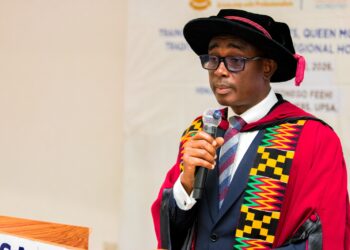
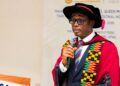
Founder and Chief Executive Officer of Global Media Foundation, (GLOMEF) Mr. Raphael Ahenu, has urged the International Monetary Fund (IMF) to stop granting loans to Ghana until the country addresses corruption and strengthens its economic management.
Speaking as a panelist on Hot Points, a weekend political talk show on Sunyani-based Space FM, Mr. Raphael Ahenu argued that if the IMF is truly committed to supporting Ghana’s development, it should advise the government to fix systemic challenges rather than approve more loans.
Mr. Raphael Ahenu was speaking against the backdrop of a new World Bank report, which revealed that Ghana has spent 40 out of 68 years under IMF programmes. The report, contained in the Bank’s 2025 Policy Notes titled “Transforming Ghana in a Generation”, warned that without reforms, Ghana’s growth would plateau around 3.8 percent, delaying the country’s attainment of upper-middle-income status beyond 2050. It further stressed that persistent governance challenges, fiscal indiscipline, inefficiencies, and mismanagement continue to obstruct reforms and erode public trust.
According to Mr. Raphael Ahenu, the IMF itself must share the blame for Ghana’s economic woes and current struggles. He alleged that the Fund deliberately keeps countries like Ghana dependent on its programmes so they can continue to manipulate the system. “If the IMF truly wants Ghana to progress, it must stop granting loans and instead compel government to confront corruption and manage resources better,” he said.
He expressed concern about revenue losses due to corruption, stressing that Ghana has failed to retrieve significant amounts of money that could have boosted national development. He also questioned how much the country benefits from its mineral resources, particularly gold.
Citing Botswana as an example, Mr. Raphael Ahenu noted that the southern African country secures not less than 40 percent of its resources in agreements, unlike Ghana, which has been mining gold for decades without commensurate development. He further questioned Ghana’s share in contracts with multinational firms such as Newmont Ghana.
Turning to oil, he demanded clarity on the country’s percentage share from petroleum resources and asked how many Ghanaians are involved in monitoring the actual quantities of gold, oil, and other natural resources exported to prevent underreporting and cheating.
Mr. Ahenu also warned about threats to Ghana’s cocoa sector, cautioning that the country could lose its position as the world’s second-largest cocoa producer.
He pointed to rising competition from countries such as Cameroon, Malaysia, China, and Nigeria, which he said are making significant strides in cocoa production to drive national development.