
By Joseph Gerald Tetteh Nyanyofio, Ph.D.
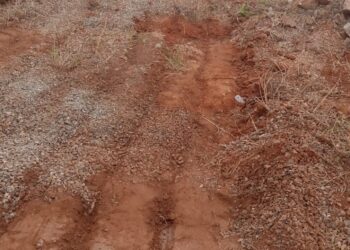
At about 4 am on Friday, October 2, joint forces comprising officers of the Ghana Police Service, Military Police (MP), Fifth Battalion (5BN), and 48 Engineer Regiment, stormed the popular La Pleasure Beach and ordered workers to vacate the premises for a demolition exercise.

The operation followed an earlier exercise at Laboma Beach Resort on September 13 under the Post-Flood Mitigation Task Force to restore the Kpeshie Lagoon and mitigate flooding in Accra. Flood control and the protection of public assets are legitimate public objectives. Authorities of the hotels which adjoin the area, and are owned by the Social Security and National Insurance Trust (SSNIT), have also cited concerns about security and damage to the coastal ecosystem.
The critical question, however, is not simply whether the state or the hotel has the authority to act, but how it treats the people whose livelihoods depend on the land it clears.
The Cost of Displacement
Some of the affected vendors maintained that they were not given prior notice, and were forcibly prevented from retrieving their belongings, while others considered the notice period inadequate. Yet one worker, a single mother, said she and her colleagues had been given two weeks to vacate but had not believed the order would actually be enforced.
Both the Member of Parliament (MP), Honourable Rita Naa Odoley Sowah, and the Municipal Chief Executive (MCE), Honourable Alfredos Nii Anyetei, in the aftermath of the exercise, disclosed that many people have been rendered jobless. This arguably constitutes one of the most significant concentrations of informal economic activity across the La, Osu and Teshie communities.
Although some of the affected enterprises were registered businesses, beach economies are predominantly sustained by stallholders, food and beverage sellers, casual workers, and small traders. In Ghana, such workers mainly operate informally: an estimated 89 per cent of employment is informal (Baah-Boateng and Vanek, 2020).
No comprehensive count of those displaced has been published. But the economic asymmetry is clear. A formal business owner may have lawyers, savings and other assets to fall back on; a vendor may have little more than a stall, a day’s stock, and the daily income generated from it. For the latter, losing a workplace can mean losing the means of feeding an entire family.
What Research Tells Us
A 2024 study by Alex Anlesinya and Gerald Joseph Tetteh Nyanyofio, Decent Work, Informality and Pandemic: Empirical Insights from Ghana, examined the lived experiences of workers of the informal economy in Accra’s markets and explored what decent work means to them.
Although the study focused on the COVID-19 pandemic rather than demolitions, its findings illuminate the vulnerability that accompanies the loss of an informal workplace.
First, income is inseparable from survival. Workers in the informal economy value work primarily for what it enabled them to provide: food, clothing, shelter, and school fees for their children. As one trader put it, “stopping work meant leaving the family hungry”. A demolition can therefore destroy both income and the means of earning it.
Second, informal workers often have little financial cushion. The authors describe workers with limited savings, restricted access to credit and inadequate social protection. During the pandemic, rising costs eroded business capital. A demolition can replicate that shock in a single morning, destroying stock, equipment, and productive assets alongside the workplace.
Third, work provides more than money. The research participants spoke of autonomy, self-respect, social relationships and the aspiration to educate their children, including through university. Losing a trading space can therefore undermine not only income but also dignity, social belonging, and future prospects.
Fourth, social protection often fails to reach those who need it most. Participants reported receiving little assistance from authorities during the pandemic, while earlier research cited by the authors documented harassment, eviction and fines without adequate legal or social protection.
While the study is small and exploratory and did not examine demolitions, and the findings are not to be treated as direct evidence of the consequences of the Laboma Beach Resort and La Pleasure Beach exercises. They are, nonetheless broadly consistent with wider International Labour Organisation (ILO) and Women in Informal Employment: Globalising and Organising (WIEGO) research on informality, vulnerability and decent work.
Rights, Process and Accountability
The demolitions at the Laboma Beach Resort and La Pleasure Beach raise important questions beyond urban planning and flood control, particularly concerning property rights, livelihoods, due process, equality, and human dignity. While the state may lawfully intervene in the interests of public safety, environmental protection, and town planning, the critical issue is whether such powers are exercised lawfully, proportionately and with adequate regard for those whose livelihoods are affected.
Articles 18 and 20 of Ghana’s 1992 Constitution provide protections relating to property and compulsory acquisition, while Article 24 recognises the right to work under satisfactory, safe and healthy conditions. Articles 15, 17, 19, and 23 further reinforce principles of human dignity, equality and fair administrative treatment. If affected vendors received inadequate notice or were denied reasonable access to retrieve their belongings, the legality and fairness of the process warrant scrutiny. International standards on forced evictions similarly emphasise consultation, adequate notice and safeguards against unnecessary hardship.
At the same time, Article 18(2) permits lawful interference with property where reasonably required for purposes including town planning and public safety. The issue, therefore, is not simply whether the state has the power to act, but whether that power was exercised within the law and through a fair and proportionate process.
Accountability should also extend beyond those whose structures were cleared to those responsible for permitting or tolerating them in the first place. Section 117(2) of the Land Use and Spatial Planning Act, 2016 (Act 925) provides sanctions for certain unauthorised developments, but the circumstances under which such structures were allowed to emerge and persist also merit examination.
An independent inquiry could establish who authorised or tolerated the developments, what notices were issued, whether affected persons were given meaningful opportunities to comply, and why enforcement ultimately proceeded as it did. Development and environmental protection are legitimate public objectives, but the manner in which they are pursued is equally a test of constitutional governance, accountability, decent work, and human dignity.
What Should a Fair Clearance Policy Look Like?
- Guarantee fair notice and due process. Workers should receive adequate notice and reasonable access to retrieve stock, equipment, and personal belongings. Where ownership is before the courts, the state should respect the judicial process or clearly explain the legal basis for proceeding.
- Count people before clearing land. Authorities should enumerate vendors, employees, and other workers likely to be affected and conduct a social-impact assessment. Without a register of those affected, compensation and relocation are inevitably incomplete.
- Provide relocation and compensation. Where clearance is unavoidable, displaced workers should be offered trading spaces reasonably close to their customers. Compensation for destroyed stock and equipment should extend beyond registered business owners to other demonstrably affected livelihood operators.
- Support workers to restart. Because loss of working capital can be the most immediate blow, government should consider grants or low-interest financing through existing subsidised programmes, with arrangements accessible to workers without conventional collateral or extensive paperwork.
- Apply transparent and consistent criteria. If flood risk, environmental vulnerability or public safety determines which structures must be removed, those criteria should be published and applied consistently. Transparency would strengthen public confidence and reduce perceptions of selective enforcement.
- Give workers a seat at the table. The ILO’s decent-work agenda places social dialogue at the heart of sustainable employment. Traders’ and vendors’ associations should therefore be consulted before major clearance exercises, not merely informed afterwards.
- Close the social-protection gap. SSNIT says its hotels belong to Ghana’s workers and pensioners. Yet many informal workers operating around such assets remain outside conventional pension arrangements. Expanding access to contributory pensions and health insurance would reduce the vulnerability documented in research on Ghana’s informal economy.
The Way Forward: Development Must Not Make People Disposable
Ghana can protect its coastline, mitigate flooding and safeguard public assets while also protecting the people whose livelihoods are affected by these interventions.
When a market or beach is cleared, what disappears may be far more than a physical structure. Income is lost. Savings may be depleted. Business capital disappears. Household security is weakened. Children’s education may be put at risk. And, with them, a worker’s sense of autonomy and dignity. The true test of a responsible clearance exercise should therefore extend beyond whether the land has been cleared. It should also ask: What happened to the people who depended on it?
A government committed to decent work should be able to demonstrate that its development, environmental and enforcement decisions have accounted for both the public interest and the human cost. The bulldozers may clear the land, but good policy must ensure that they do not also bulldoze away people’s livelihoods.