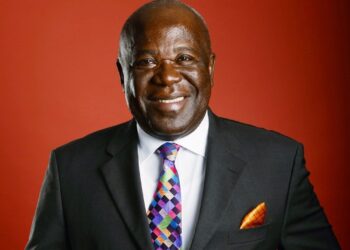
Executive Director of Africa Education Watch (EduWatch), Kofi Asare, says early results from a national survey of senior high school teachers point to a combination of internal and external factors behind Ghana’s sharp drop in the 2025 WASSCE results.
Speaking on Channel One TV’s Breakfast Daily on Friday, he described the preliminary findings as “very concerning,” emphasising the need to confront the root causes rather than dwell on the disappointing grades.
EduWatch is still collecting responses from teachers across the country, with 648 senior high school teachers submitting feedback as of Friday morning, December 12. Their input, Mr. Asare said, sheds important light on what contributed to the poor outcomes, especially in Core Mathematics.
According to the survey, 81% of teachers cited inadequate preparation as one of the top reasons for the decline. Mr. Asare noted that many students may not have fully covered the syllabus or engaged in enough practice ahead of the exam.

Additionally, 46% of respondents pointed to strict supervision and invigilation, stating that this year’s tighter exam conditions exposed weaknesses in students’ ability to solve problems independently.
A further 31% highlighted reduced leakages, explaining that limited access to leaked questions meant students had to rely solely on their own competence. Meanwhile, 21% of teachers blamed the higher difficulty level of the exam questions.
Beyond these factors, 24% selected “others,” mentioning issues like excessive social media use, indiscipline, and an over-reliance on teachers — behavioural patterns that may have also contributed to the poor outcomes.
“These insights give us a fair idea of what teachers believe caused the abysmal performance, particularly in Mathematics,” Mr. Asare stated. He added that the findings, together with the Chief Examiner’s report, will inform EduWatch’s recommendations to the Ghana Education Service.
This year’s results marked one of the steepest declines in recent years. Passes (A1–C6) in Core Mathematics fell by more than 96,000 — from 305,132 in 2024 to 209,068 in 2025. With an overall pass rate of 48.73%, more than half of the candidates failed to meet the minimum requirement for tertiary admission.
Further analysis shows that nearly one in four candidates failed both Core Mathematics and Social Studies, underscoring widespread academic challenges across multiple subjects