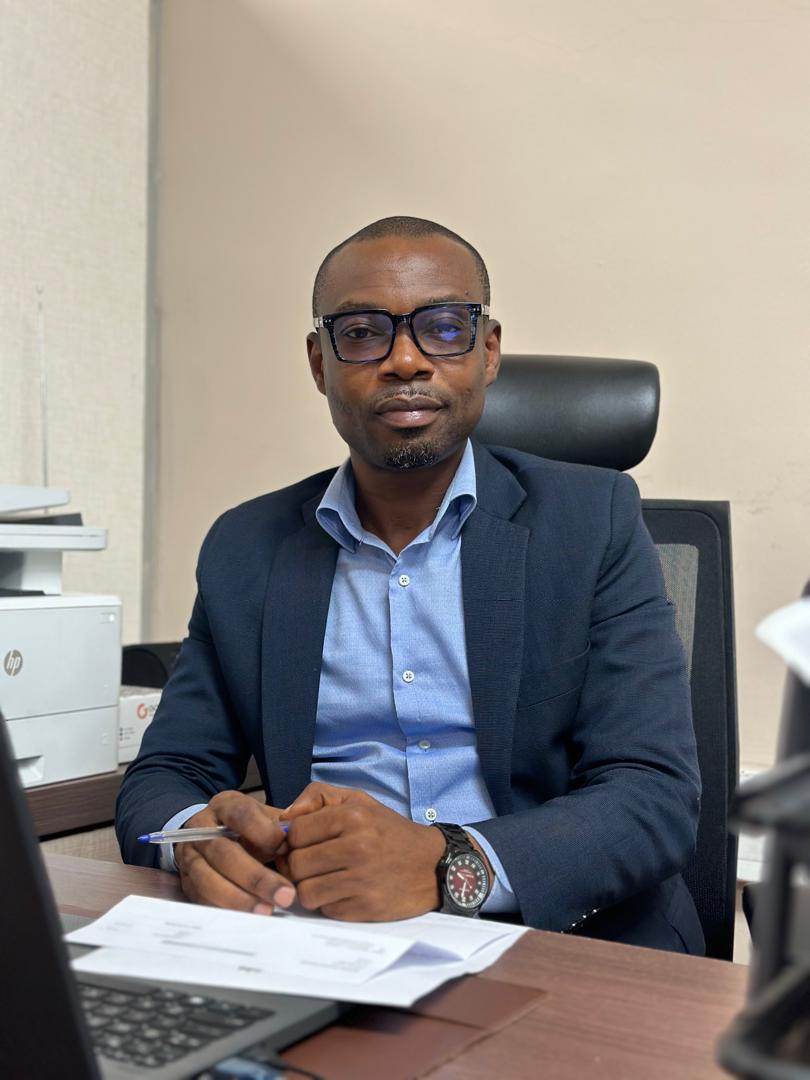

By Benjamin Teye Larweh, The Nobi Boy
In 1995, I completed my basic education at Samlesi Amanga L/A JSS with an aggregate of 08.
At the time, it was a remarkable achievement. My result was reportedly the best among the surrounding villages and towns. What makes the achievement even more significant to me is that it took almost 30 years before another student from the area could break that record.
But there is another side to that story. Despite obtaining an aggregate of 08, I was refused admission to Pope John’s Secondary School, the school I had hoped to attend.


Looking back three decades later, I have come to appreciate that my experience was not merely about one boy missing out on one school. It was a reflection of a much bigger problem in Ghana’s education system: we have often expected children from vastly unequal circumstances to compete as though they started from the same position. They do not.
I DID NOT STUDY UNDER THE SAME CONDITIONS
Throughout my basic education, there was no electricity in my village (Nobi Yorkornor)
I studied with lanterns. When night fell, while children in towns and cities could sit under electric lights and study, my reality was different. The lantern was my source of light.
Getting to school was another challenge. I had to walk several kilometres to attend classes. And there was something else that may appear ordinary today but was significant at the time.
Throughout my basic education, the only time I saw examination questions printed on paper was during our JHS 3 mock examinations, barely four months before the BECE. Prior to all, all our examination questions were written on chalk boards and deleted immediately to make way for the next subject.
Think about that.
A child preparing to compete in a national examination had hardly experienced the examination environment that other children encountered routinely.
Yet, on examination day, we were all placed on the same starting line.
Or, more accurately, we were told that we were on the same starting line. We were not.
EQUALITY IS NOT ALWAYS FAIRNESS
There is an important distinction between equality and equity. Equality says: Give every child the same opportunity.
Equity asks a more difficult question: What must we do to ensure that children who start from significantly disadvantaged circumstances have a genuinely fair opportunity to compete?
A child in a well-resourced school in Sakaman may have electricity, computers, textbooks, internet access, trained teachers, extra classes, mock examinations and exposure to examination formats from an early age.
Another child in Nsutapong, Pepetifi, or Opesika may walk several kilometres to school, study under a lantern, share limited textbooks with several classmates and have little or no exposure to computers.
Then both children sit the same examination. We call this equality. But is it fairness? This is the question Ghana must confront.
THE PROBLEM HAS NOT DISAPPEARED
Thirty years after my BECE, technology has transformed the way students are assessed and placed into Senior High Schools.
The Computerized School Selection and Placement System (CSSPS) has been designed to bring important efficiencies to the placement process. But technology, by itself, does not necessarily guarantee equity. In fact, if we are not careful, technology can make existing inequalities less visible.
A computerized system can process thousands of candidates with impressive speed. It can apply rules consistently. It can eliminate some forms of human interference.
But a computer does not know that one child studied under electricity while another studied under a lantern.
It does not know that one candidate had access to computers for years while another may not have encountered a computer at all before the examination.
It does not know that one child walked five kilometres to school every morning while another was driven to school.
It sees grades. It processes choices. It applies algorithms. But children are more than numbers.
SHOULD A RURAL CHILD BE PENALISED FOR BEING BORN IN A DEPRIVED COMMUNITY?
This is not an argument for lowering academic standards. Neither is it a call for unqualified students to be admitted into elite Senior High Schools.
It is a call for Ghana to recognise that academic performance is produced within social and educational environments.
If two children achieve the same aggregate but one has done so despite significantly fewer educational resources, should the system at least be capable of recognising that circumstance?
If a brilliant child from a deprived community narrowly misses the cut-off for a highly competitive school because of the structural disadvantages surrounding his or her education, should there be no mechanism to identify and support that child?
These are difficult questions, but they deserve serious national discussion.
WE NEED A DEPRIVATION-SENSITIVE PLACEMENT SYSTEM
Ghana should consider developing mechanisms within the SHS admission and placement framework that recognise students from demonstrably deprived educational environments.
I am aware that there is a carefully designed equity or contextual admissions mechanism for students from underserved communities. But is it working as required? Such a mechanism could consider factors such as:
* The location and deprivation status of the student’s basic school;
* Availability of electricity and digital learning facilities;
* Teacher availability and school resources;
* Distance travelled to school;
* Access to textbooks and learning materials;
* Historical academic performance of the school;
* Socio-economic conditions within the community; and
* The student’s individual academic performance.
The purpose should not be to give rural children an unfair advantage. The purpose should be to prevent structural disadvantage from becoming a permanent educational sentence.
WE MUST ALSO INVEST BEFORE THE PLACEMENT STAGE
The bigger solution, however, must begin long before BECE results are released. If we genuinely want equal opportunity, then children in deprived communities must receive comparable educational resources.
We need electricity in every school. We need functional libraries. We need laboratories. We need computers and reliable internet connectivity. We need qualified and motivated teachers. We need regular mock examinations and exposure to examination formats. We need reading programmes. We need strong guidance and counselling.
And where communities are extremely remote, we must find innovative ways of reducing the distance children travel to school.
The ultimate objective should be to eliminate the disadvantage, not merely compensate for it at the point of admission.
MY STORY IS NOT ABOUT ME
I sometimes look back at that 1995 result and wonder what would have happened if the circumstances had been different.
What if I had studied under electricity? What if I had regular access to textbooks? What if I was exposed to printed examination papers long before sitting the BECE? What if I had attended a well-resourced school?
What if the admissions authorities had understood the context in which I achieved aggregate 08?
I will never know. But I do know this:
There are thousands of children in Ghana today who are living my 1995 story. They are intelligent. They are hardworking. They are ambitious. They are capable of excelling. But they are competing against children who have had educational opportunities that they simply have not had.
We cannot continue pretending that the competition is entirely fair simply because everybody eventually sits the same examination.
LET US NOT ALLOW A CHILD’S GEOPOLITICAL LOCATION TO DETERMINE HIS OR HER DESTINY
A child’s potential should not be determined by whether he or she was born in Accra, Kumasi, Takoradi or a small village such as Ahinkwa that many Ghanaians have never heard of.
A child should not be disadvantaged because his or her community does not have electricity. A child should not be less competitive because his or her school lacks computers. A child should not be made to pay for circumstances over which he or she has absolutely no control.
And most importantly, a child’s geographical location should not become a proxy for his or her intellectual ability.
My aggregate 08 in 1995 was not achieved because the circumstances were favourable. It was achieved despite the circumstances. That distinction matters.
Today, as Ghana continues to refine its computerized SHS placement system, we have an opportunity to ask a fundamental question:
Are we merely placing students efficiently, or are we placing them fairly? Efficiency is important. Transparency is important. Merit is important. But equity is equally important.
The children of deprived communities do not need sympathy. They need opportunity. They do not need standards to be lowered for them. They need the barriers standing between their ability and opportunity to be recognised and addressed.
Thirty years ago, I was the Nobi Boy who scored aggregate 08 but refused admission to my first choice school while several students from well-resourced schools who even scored lower grades than mine got admitted.
Today, I speak for similar Nobi Boys and Nobi Girls across the country who are still sitting under lanterns, walking long distances to school and dreaming of entering Ghana’s best Senior High Schools.
Let us build a system in which where a child comes from does not determine how far that child can go.
That is not favouritism. That is educational justice.
Benjamin Teye Larweh
The Nobi Boy