


By Richard DABLAH | For public reflection and civic discourse
The city lives, they say—it hums, it heaves, it breathes. But what happens when it
forgets the wisdom of sleep?
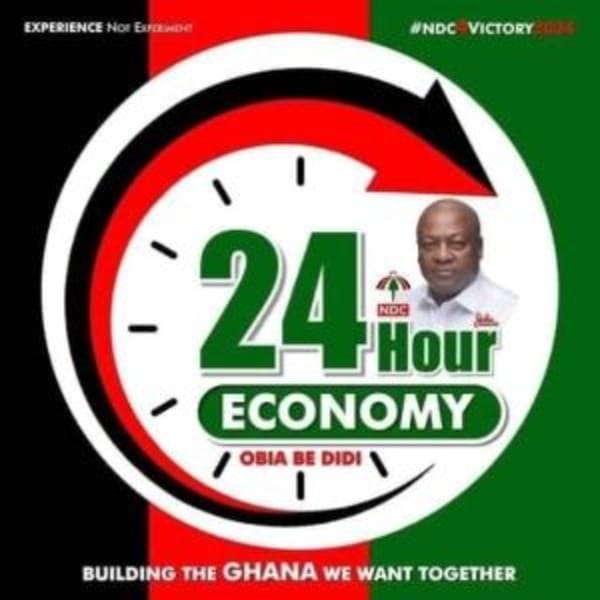
As Ghana officially launches its 24-Hour Economy Policy, this essay urges the nation to
reconsider what it means to extend productivity into every hour of the day. Drawing on
Ghana’s post-independence economic evolution, global systems thinking, ecological
ethics, and African temporal philosophy, the article challenges the assumption that
“more time means more growth.” Instead, it calls for a regenerative and rhythmic
economy—one that honors the deep intelligence of pause, rest, and renewal.
The idea of a 24-hour economy is not new. But what is new—and urgent—is its context.
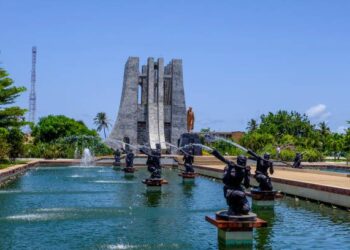
When Ghana’s first president, Kwame Nkrumah, sought to industrialize the country
through the Seven-Year Development Plan in the 1960s, his vision extended beyond
steel mills and roads. He was attempting to liberate Ghanaian time from colonial control.
To him, economic time was not just about work—it was about self-determined futurity.
He envisioned a Ghana whose tempo was set not by extraction but by collective
purpose—where time could be molded to match the aspirations of a free people.
Yet that dream frayed. The coups and crises that followed fractured national time. The
structural adjustment years compressed life into survival, turning time into a currency
most couldn’t afford. Ghana’s informal economies began living the 24-hour cycle long
before policy gave it a name—vendors, drivers, waste pickers, and carers stitched
together livelihoods under the weight of a system that demanded motion without rest.
The 24-hour economy enters this era polished with promise: streamlined logistics, more
jobs, digital expansion, and nightlife reawakened. But what lies beneath? Are we
crafting something new—or illuminating, with LED efficiency, the same tired logic that
wore us thin before?
The night, in truth, is not the problem. The danger lies in how we design around it.
Around the world, we’ve seen how economies stretched across all hours can also
stretch people thin—deepening fatigue, fragmenting labor protections, and inflaming
inequality. The challenge is not extending time, but shaping it well.
Ghana has the rare chance to shape differently—to model a 24-hour rhythm that is not
merely efficient but wise. One that treats the dark hours not as leftover space to exploit,
but as a terrain for the regeneration of ecosystems, communities, and human dignity.
Imagine a night economy that nourishes rather than extracts. One where systems move
in cycles, not just in straight lines. Where compost loops, clean energy, water reuse,
and biodiverse design shape how cities breathe through the dark. A city that makes
space for sleep, silence, and microbes to work—not only machines and screens.
Such a future does not need to deny motion, but it must elevate meaning. The
extension of time should be an expansion of care, not just an increase in capacity. If
night workers are the backbone of this vision, then they must also be its stewards—with
fair shifts, safe mobility, and a say in how the night unfolds.
There is also a deeper cultural current here. Ghana is not just adding hours; it is
confronting its relationship with time itself. Our calendars have long held sacred
rhythms: of fasting and festivals, of new moons and ancestral rites. These temporal
ways are not “backward”—they are forms of intelligence that see time as lived,
relational, and sacred.
To erase these in the name of speed would be a loss not just of culture, but of sanity.
Let Ghana show the world that a 24-hour economy need not trade rest for revenue nor
silence for surveillance. Let us shape a rhythmic economy—a breathing system where
growth pulses with pause and where acceleration listens to the wisdom of rest.
Let us not forget: economic growth means little if we do not grow wiser alongside it. To
reclaim time is to reclaim a future that reflects who we are—and who we hope to
become.
The lights may stay on, but the wisdom must stay intact