
_by_ Richard DABLAH
Every August, Ghana performs the same ritual.
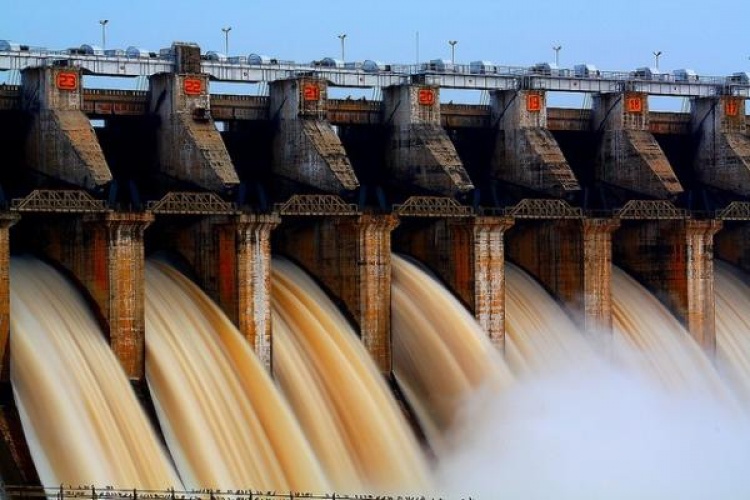
Upstream in Burkina Faso, the waters behind the Bagré Dam rise. Engineers monitor the reservoir. Authorities exchange information. Warnings travel downstream. Communities along the White Volta are told to prepare. Farmers are advised to harvest what they can. Families are encouraged to move to safer ground. Relief agencies begin mobilising.
Then the water comes.


The White Volta rises. Farms disappear beneath it. Homes are inundated. Roads are cut off. Livestock is lost. Families are displaced.
And Ghana calls it an emergency.
But there is a question we have avoided asking for far too long:
**How many times must a predictable event occur before our failure to prepare for it becomes the real disaster?**
For almost three decades, the same geography has produced a familiar tragedy. The same river rises. The same communities are exposed. The same farmers lose crops. The same institutions issue warnings. The same relief items are distributed. And when the water recedes, the country quietly prepares to be surprised again.
This is not merely a flood problem.
It is a problem of political imagination.
Ghana knows that the water will come. It knows where the river will overflow. It broadly knows the communities, farms and roads most exposed. It possesses hydrological institutions, disaster-management agencies, water authorities and increasingly sophisticated forecasting tools.
The problem, therefore, is not ignorance.
It is something more disturbing.
**We have information without transformation.**
We know, but we do not reorganise society around what we know.
And this is where predictability changes the meaning of responsibility.
A flood that arrives unexpectedly may be called a natural disaster. But a flood that returns through a known river system, during a broadly familiar season, affecting recognisable communities, can no longer be treated as though nature alone were responsible for the consequences.
At some point, the water stops being the only disaster.
**The failure to govern its arrival becomes one.**
Ghana’s response remains trapped in what might be called the politics of the event. We wait for the reservoir to fill. We wait for the warning. We wait for the water to move. Then we activate the machinery of emergency.
But the White Volta is not an event.
It is a cycle.
And there is a profound difference between governing an event and governing a cycle.
An event-based state waits for the crisis.
A cycle-based state prepares before the crisis becomes visible.
This distinction is not academic. It determines who loses everything.
A family can evacuate in forty-eight hours.
A maize field cannot.
A farmer may carry a few belongings to higher ground.
He cannot carry an entire agricultural season.
This is the hidden weakness of Ghana’s flood politics: **we have confused evacuation with management**.
Evacuation protects human life in the immediate path of danger. Governance must protect the economic foundations that make life sustainable after the water has gone.
Too often, the poorest communities are asked to absorb the difference.
When upstream infrastructure must release water, someone bears the cost. The smallholder loses the harvest. The herder loses livestock. The household loses productive assets. Local economies lose income.
Then the state arrives with relief.
But relief has a strange political quality. It can make suffering visible without changing the system that reproduces it.
A bag of rice can feed a family.
It cannot restore a destroyed harvest.
A mattress can provide temporary comfort.
It cannot repay a farmer’s debt.
Emergency relief is necessary. But when relief becomes the permanent answer to a predictable problem, charity begins to substitute for governance.
The uncomfortable truth is that communities along the White Volta have become the **unpaid shock absorbers of a transboundary water system they do not control**.
This is not simply vulnerability.
It is an externalisation of risk.
Upstream infrastructure produces benefits through electricity, irrigation and water management. But when the system reaches its limits, downstream communities can inherit the consequences.
That should force us to reconsider the moral architecture of transboundary water governance.
If the benefits of managing a river are shared, why should the risks be carried disproportionately by those living downstream?
Ghana should champion a simple principle:
**No upstream benefit without downstream risk-sharing.**
This is not an argument against Burkina Faso. It is an argument against the illusion that a river can be divided into separate national realities.
Water ignores borders.
Gravity does not carry a passport.
A decision made upstream can become a destroyed harvest hundreds of kilometres away.
The Volta Basin must therefore be governed as a connected system of water, infrastructure, ecosystems and livelihoods.
This also requires Ghana to resist another familiar temptation: the belief that one great infrastructure project will finally solve everything.
The proposed Pwalugu Multipurpose Dam could be important. But a dam is infrastructure.
A river basin is an ecosystem, an economy, a settlement system and a political geography.
Concrete can regulate water.
It cannot, by itself, regulate vulnerability.
What Ghana needs is a **downstream operating system**: an integrated architecture linking hydrological forecasting, satellite and telemetric data, ecological restoration, floodplain management, agricultural planning, livestock mobility, infrastructure protection and automatic financial support.
Before the water arrives, the state should already know which farms are exposed, which roads will be affected, which communities require evacuation and which households will require immediate financial protection.
This is where Ghana must move beyond early warning toward **Predictive Basin Governance**.
But even warning has its limits.
What does an SMS alert mean to a farmer who has nowhere to store a harvest?
What does a five-day forecast mean to a household without savings, insurance or alternative land?
Information without capacity can simply make people better informed about their approaching losses.
That is why resilience must become economic.
Farmers in high-risk zones should be mapped and supported through parametric insurance and automatic compensation mechanisms. Agricultural calendars should respond to hydrological forecasts. Flood-compatible farming should be encouraged where appropriate. High-risk settlement patterns must be reconsidered. Wetlands and floodplains should be treated not as wasted land, but as ecological infrastructure.
The state must stop asking only, **“How do we warn people?”**
It must begin asking:
**“How do people live differently when the warning is true?”**
That is the real question.
Ghana already has many of the institutions, technologies and legal structures required to begin this transformation.
What it lacks is integration.
We have institutions without a common operating doctrine.
We have warnings without sufficient economic protection.
We have data without a system capable of translating knowledge into anticipatory action.
The White Volta will rise again.
The physics of the basin are not negotiable.
But vulnerability is.
After almost three decades of rehearsal, Ghana can no longer claim surprise.
The question is no longer whether the water will come.
It is whether we will continue building a country that behaves as though knowledge and preparation were the same thing.
They are not.
**Knowing that the river will rise is information.**
**Building a society capable of living with its rise is governance.**
Until Ghana understands that difference, the White Volta will continue to expose not merely the weakness of our flood defences, but the deeper weakness of a state that repeatedly knows what is coming and still allows the poorest to pay the price for its arrival.