

Debate on Masculinity
By Richard DABLAH / Email: richard.dablah@gmail.com
Introduction: The Unsettled Condition of Modern Manhood
Masculinity is everywhere in crisis. Or, to put it more precisely, masculinity is
everywhere unsettled. The once sturdy definitions of manhood — provider, protector,
patriarch — are no longer secure. Across continents, from the neighborhoods of Accra
to the streets of São Paulo, from Johannesburg to Tokyo, men confront a condition in
which the old scripts of gender falter but new scripts remain elusive. This unsettledness
provokes both anxiety and opportunity: anxiety because men feel disoriented in the
absence of clear expectations, and opportunity because the collapse of patriarchal
certainties opens a pathway toward more humane, relational, and ethical definitions of
manhood.
Nowhere is this negotiation more vivid than in Ghana and across Africa. For too long,
Africa has been positioned at the margins of global debates on gender — as though
African men were merely catching up with Western arguments about toxic masculinity or
feminist critique. Yet the reality is otherwise. African masculinities, pressured
simultaneously by tradition and modernity, by economic collapse and global discourse,
by communal philosophies and neoliberal fragmentation, are central laboratories for
reimagining what masculinity can mean.
To grasp this, one cannot rely on a single disciplinary lens. Masculinity is not only
cultural but also economic, not only psychological but also philosophical, not only
political but also imaginative. This essay takes a multidisciplinary approach — weaving
sociology, psychology, anthropology, history, political economy, philosophy, and culture
into a single long-form reflection. It begins with Ghana, widens to Africa, and then
engages the global conversation, before returning to consider what Africa might offer
the world: a vision of masculinity grounded not in domination but in care, not in isolation
but in relational humanity.
Ghana: Masculinity in a Changing Social Landscape
In Ghana, the archetype of the man has historically been clear. He was the provider, the
head of the family, the ɔpanyin whose authority derived not only from age but from
responsibility. Masculinity was tied to labor, to wisdom, and to the ability to anchor the
household in both material and moral terms. The man who could feed, shelter, and
discipline his kin was considered a “real man.”
This archetype has endured in cultural memory and language, yet modern Ghana
undermines its practical realization. Youth unemployment remains persistently high,
particularly in urban areas. The Ghanaian economy, like many others on the continent,
has shifted toward informal labor, precarious contracts, and uncertain incomes. For
young men in Accra, Kumasi, or Takoradi, becoming the sole breadwinner is less
attainable than it was for their fathers and grandfathers.
Sociologists describe the consequences as “fractured masculinities”: young men are
judged by standards that are structurally unattainable. They are told to be providers, yet
denied access to stable work. They are expected to marry, yet cannot afford the
elaborate rites of bridewealth or sustain the financial burdens of family life. They are
pressured to be authoritative, yet their material foundation is insecure. The gap between
the archetype and reality breeds tension, often manifesting in frustration, aggression, or
retreat into symbolic displays of masculinity.
African Masculinities: Continuities and Disruptions
The Ghanaian story echoes across the continent, though with distinctive variations. In
Nigeria, masculinity often finds expression in conspicuous wealth, public displays of
dominance, and social authority. In Kenya, certain ethnic traditions continue to
emphasize warrior identities and initiation rites. In South Africa, men negotiate the
contradictions of both Ubuntu’s relational ethic and a society plagued by some of the
world’s highest rates of gender-based violence.
These masculinities are not timeless. Anthropologists remind us that precolonial Africa
offered multiple models of manhood: farmer, warrior, hunter, elder, priest. Masculinity
was plural, context-specific, and often relational. Colonialism disrupted these forms,
imposing European models of the nuclear family and rigid gender hierarchies. The
image of the male breadwinner as the cornerstone of family life — so often defended
today as “traditional” — is in reality a colonial-modern hybrid. Recognizing this historicity
is essential: masculinity has always shifted, and what we now call crisis may simply be
the latest stage in a long evolution.
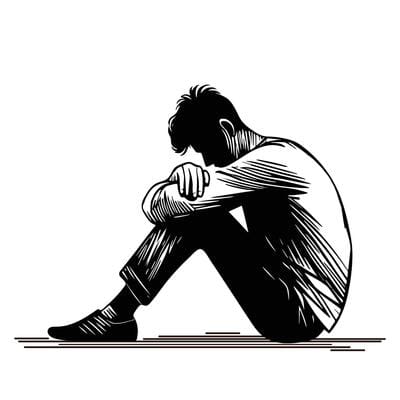
Psychology: The Inner Struggles of Men
If sociology maps the external pressures on masculinity, psychology reveals the internal
consequences. Across Africa, men are raised to equate vulnerability with weakness, to
value stoicism over expression, to treat silence as dignity. This emotional restraint may
once have been adaptive, allowing men to endure harsh environments, but in the
modern world it increasingly corrodes mental health.
Emerging data, though limited, indicates rising depression, substance abuse, and
suicide among young African men. Mental health services are scarce, and men are less
likely than women to seek help. When economic insecurity collides with emotional
repression, the result is often destructive: anger redirected into violence, withdrawal into
substance use, or despair masked as bravado. The psychological paradox is cruel: men
are told to be more open and emotionally intelligent, yet punished socially if they deviate
from stoic ideals.
Globally, similar struggles play out. In the United States, men now trail women in higher
education completion and increasingly report feelings of purposelessness. In Japan,
many men retreat into hikikomori isolation. In Latin America, cultures of machismo
encourage bravado but conceal emptiness. The masculine crisis is thus both universal
and locally specific.
Political Economy: Neoliberal Masculinity and Structural Erosion
The condition of masculinity cannot be separated from the political economy. In Africa,
the masculine archetype of provider has been systematically undermined by economic
restructuring. Structural adjustment programs in the 1980s and 1990s reduced public
sector jobs, privatized state industries, and left millions in informal labor markets. Today,
the majority of African men earn livelihoods in precarious ways: hustling, driving
motorcycles, trading in markets, juggling multiple side businesses.
This structural reality has profound gender consequences. Men judged by their capacity
to provide find themselves unable to live up to the role. Families adapt — women
increasingly contribute as equal or primary breadwinners — but cultural expectations
often lag behind economic shifts. Some men respond by embracing egalitarian
household arrangements; others reassert authority through coercion or violence.
Gender-based violence, therefore, is not only cultural but also structural, a symptom of
economic emasculation colliding with patriarchal expectations.
Political economy clarifies why masculinity feels especially unsettled in Africa: the role
that defined manhood has been eroded not by cultural choice alone but by structural
transformations beyond individual control. Any serious conversation about reimagining
masculinity must grapple with these material conditions.
Philosophy: Toward an Ethical Redefinition of Manhood
Philosophy offers a space to ask normative questions: what should masculinity mean?
In Western debates, the concept of “toxic masculinity” has illuminated the harms of
patriarchal behavior, yet it risks reducing manhood itself to pathology. African
philosophies can offer alternative visions.
The Akan ethic of leadership emphasizes service: a true leader ensures the welfare of
his people before his own. Applied to masculinity, this suggests that manhood could be
defined not by domination but by sacrificial responsibility. Ubuntu, the Southern African
philosophy of relational personhood — I am because we are — goes further. It reframes
individuality itself, suggesting that masculinity is not autonomy but interdependence. A
man’s worth lies not in how many he controls but in how many he sustains.
These indigenous philosophies, sidelined under colonialism, hold potential for a new
masculine ethic: one that values relational strength, service, and care. Far from being
relics of the past, they could serve as philosophical resources for a global redefinition of
manhood.
Literature and Culture: Imagining Men
Masculinity is not only lived; it is imagined. Literature, film, and music provide the
narratives through which societies conceptualize manhood. African literature offers stark
examples: Chinua Achebe’s Okonkwo in Things Fall Apart embodies the rigidity of
hyper-masculinity, which ultimately leads to his downfall. In contrast, contemporary
writers like Chimamanda Ngozi Adichie argue for masculinities that embrace equality
and vulnerability.
In popular culture, contradictions abound. Afrobeats artists oscillate between celebrating
wealth and power and experimenting with vulnerability and softness. Nollywood films
reproduce patriarchal norms but also increasingly depict men as conflicted, tender, or
reimagined. Culture matters because it frames the possibilities of masculinity for
millions, shaping not only how men see themselves but how women and communities
expect them to behave.
Global Currents: Crisis and Backlash
The African masculine crisis is part of a global phenomenon. In the West, debates about
masculinity have crystallized around the language of toxicity, producing both
progressive movements toward “positive masculinity” and reactionary backlashes from
men’s rights groups, incel communities, and far-right populists. In Asia, rapid
modernization unsettles Confucian patriarchal traditions. In Latin America, the cult of
machismo collides with feminist movements.
Everywhere, men are losing old privileges but struggling to find new purpose. The
vacuum left by the erosion of patriarchal scripts has invited both creative reinventions of
masculinity and dangerous retrenchments into authoritarianism and violence.
Masculinity today is contested terrain, a battlefield of competing visions.
Africa’s Contribution to the Global Debate
Africa is too often imagined as a lagging participant in global gender debates, yet it has
distinctive contributions to make. Communal philosophies, matrilineal traditions, and
cultural proverbs already encode masculinities grounded in responsibility, service, and
interdependence. In a world where neoliberal capitalism isolates individuals and
patriarchy corrodes both men and women, Africa’s traditions can inspire a new
masculine ethic: one that values belonging over dominance, care over coercion, and
service over self-aggrandizement.
This is not a romanticization. African societies, like others, are rife with patriarchal
violence and inequality. But within their intellectual and cultural heritage lie resources for
transformation. To draw on them is to acknowledge that Africa is not a mere student of
global debates but a teacher in its own right.
Conclusion: Courage to Care
Masculinity in Ghana, in Africa, and globally is unsettled because the maps of the past
no longer guide us. Yet unsettledness is not necessarily collapse; it may be the prelude
to transformation. Sociology reveals fractured roles; psychology shows inner turmoil;
political economy diagnoses structural emasculation; anthropology traces shifting
histories; philosophy reimagines ethics; culture dramatizes possibilities.
Taken together, these perspectives point toward a new masculine ethic. The man of the
future will not be the patriarch of the past, nor the hollow figure of neoliberal hustle. He
may instead be a servant-leader, an empathetic partner, a father whose strength is
expressed in care, a citizen whose masculinity is relational rather than dominating.
This is the challenge and the opportunity: to redefine strength not as domination but as
the courage to care. If African men, beginning with those in Ghana, embrace this
redefinition, they will not only navigate their own unsettled condition but also offer the
world a model of manhood equal to the complexities of the twenty-first century.
Masculinity, then, may yet be reborn — not as an echo of patriarchy, but as a pillar of

Manhood in Transition: Africa’s Place in the Global

Related Posts





Leave a Reply








ADVERTISEMENT

The New Crusading Guide is a privately own newspaper in Ghana with Mr ABdul Malik Kweku Baako as its Editor in Chief. We give you the latest news