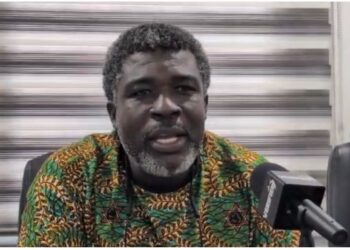
The Minority in Parliament has noted with interest the recent remarks by Prof. Kwamena
Ahwoi, a distinguished scholar and former Minister for Local Government, at the National
Dialogue on Decentralization and Responsive Governance. While we respect his long-
standing contributions to Ghana’s decentralization process, we find it necessary to correct
some inaccuracies and misconceptions contained in his submission.
First, decentralisation is not merely about maintaining existing structures; it is about
bringing government closer to the people and ensuring equitable development across the
country. The creation of new districts and regions was, and remains, a deliberate policy
choice to extend the reach of government, empower local structures, and enable previously
underserved areas to directly receive attention and resources for development. To describe
these initiatives as counterproductive fails to appreciate the essence of decentralisation
itself.
Secondly, the suggestion that the creation of six additional regions between 2018 and 2019
was an “overreach” because Ghana survived with ten regions for over five decades is a
misreading of the rationale behind the policy shift. The question was never about mere
survival. It was about facilitating growth, inclusion, and accelerated development.
2


These new regions and districts have already opened up opportunities for infrastructure,
social services, and investment that were previously constrained under the old regional
structure.
Thirdly, Prof. Ahwoi’s claim that presidents have not kept faith with population
requirements in the creation of MMDAs is not borne out by fact. Every metropolitan,
municipal, and district assembly that was created, at least under the NPP administration,
satisfied the population thresholds and economic viability requirements enshrined in the
Local Governance Act, 2016 (Act 936). The process was undertaken with due regard to the
law, not partisan convenience.
Fourthly, beyond the legal thresholds, the tangible results of the creation of the six new
regions cannot be overlooked. Each of the regions now has a Regional Coordinating
Council with full departmental structures for Education, Health, Agriculture, and
Highways, ensuring decentralised services are delivered to areas that previously had little
or no access. Residential facilities have been built for senior heads of public services, while
all the security agencies; Police, Immigration, Fire, and Prisons; have established new
regional offices with permanent infrastructure and trained personnel. In total, over 60
monumental developments of varying scale were completed in record time under the
Akufo-Addo administration. These projects are not theoretical; they are functional,
operational, and in daily use by citizens across the new regions.
Finally, while the programme at which Prof. Ahwoi made his remarks was couched in the
language of “resetting decentralisation,” we observe that the framing and theme appear
politically motivated, designed to advance the agenda of the ruling party rather than
provide a neutral platform for a balanced national dialogue. The Minority believes that
decentralization is too important to be reduced to partisan talking points.
In conclusion, Ghana’s decentralization journey must be understood as a dynamic process
aimed at deepening governance, empowering communities, and expanding opportunities
3
for development. The creation of new districts and regions is not an overreach; it is an
investment in inclusion and nation-building.
SIGNED
HON. FRANCIS ASENSO-BOAKYE
RANKING MEMBER, COMMITTEE ON LOCAL GOVERNMENT AND
DECENTRALIZATION.