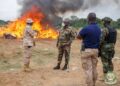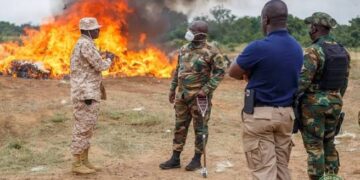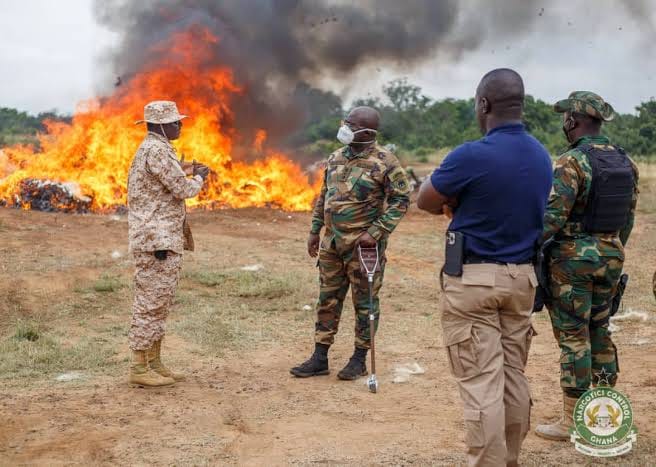

The Narcotics Control Commission (NACOC) has destroyed narcotic substances with an estimated street value exceeding US$10 million in a major exercise at Bundase, in a move aimed at preventing thousands of seized drug consignments from finding their way back into society.
The destruction involved a substantial quantity of synthetic opioids, codeine-based cough mixtures and cannabis intercepted during various anti-narcotics operations.
Figures released by the Commission indicate that synthetic opioids constituted the largest portion of the consignment, with 4,730,100 tablets and capsules valued at approximately US$5.9 million.
Also destroyed were 338,000 bottles of codeine-infused cough mixture, estimated at US$4.2 million, while 564.39 kilogrammes of cannabis, with a street value of US$112,878, completed the consignment.

The exercise underscores the scale of the narcotics trade confronting law enforcement agencies and the quantities of prohibited substances being intercepted through ongoing enforcement operations.
Ahead of the destruction, the Ghana Standards Authority (GSA) conducted verification tests to establish the identity of the substances. The laboratory examination confirmed the presence of cannabis in the samples tested.
The exercise comes at a particularly sensitive time for Ghana’s anti-drug enforcement architecture, following the recent seizure of suspected narcotics in Lebanon involving a consignment reportedly linked to Ghana.
The international development has renewed questions about the country’s vulnerability to drug trafficking networks and the effectiveness of its border surveillance and enforcement mechanisms.
Addressing the concerns, NACOC Director-General, Major General Maxwell Obuba Mantey, reaffirmed the Commission’s determination to confront the narcotics trade, insisting that the Lebanon incident should not automatically be interpreted as a failure of the institution.
He acknowledged the enormous challenges associated with combating drug trafficking but maintained that such difficulties would not weaken the Commission’s resolve.
According to him, NACOC remains committed to strengthening its operational capacity and intensifying efforts to identify and disrupt the networks behind the illicit narcotics business.
The Bundase exercise is therefore not merely a disposal of confiscated substances but also part of the broader effort to ensure that drugs intercepted by law enforcement agencies do not return to circulation through illegal channels.
However, beyond the destruction of seized consignments, the latest development also places renewed emphasis on the need for sustained intelligence-led operations, effective border controls and stronger international cooperation to confront the increasingly complex narcotics trade.