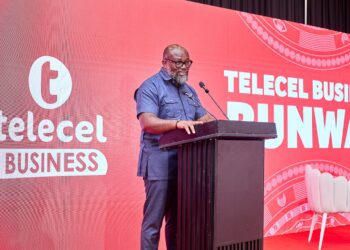
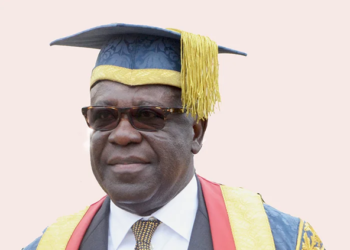
Member of Parliament (MP) for Nhyiaeso Constituency in the Ashanti region, Dr. Stephen Amoah, a respected voice on economic matters in the country, has raised concerns over what he describes as a constitutional and ethical conflict arising from the appointment of Isaac Adongo, to the Board of the Bank of Ghana (BoG) while serving as the Chairman of Parliament’s Finance Committee.
At issue is what Sticka believes is a potential breach of the 1992 Constitution and Parliament’s Standing Orders, which Dr. Amoah argues, clearly separates the oversight responsibilities of Parliament from the operational roles within state institutions.
“How can the Chairman of the very committee tasked to oversee the Bank of Ghana also be a board member of that same institution?” Dr. Amoah asked. “This creates a classical conflict of interest and violates the fundamental principle of ‘nemo judex in causa sua’—a person cannot be a judge in their own case,” he asserted.
Dr. Amoah referenced Article 184(1) of the Constitution, which mandates the Finance Committee to monitor the Bank of Ghana’s foreign exchange activities and submit reports to Parliament every six months. This duty, he contended, is now severely compromised as Hon. Adongo, who is expected to scrutinize the central bank’s operations, also sits on its board as a non-executive member.


He further cited Order 228(2) of the Parliamentary Standing Orders, which echoes the constitutional requirement and solidifies the Finance Committee’s role in ensuring central bank accountability.
“This isn’t merely an ethical concern,” Dr. Amoah said, averring that “It is a legal conflict, and it undermines the sovereignty of Parliament’s oversight function. It is not just unwise—it may be unconstitutional.”
Dr. Amoah, a member of the Minority Caucus and former Deputy Finance Minister, made an impassioned appeal for a national conversation on the matter, describing the dual role as a “legal and governance anomaly” that threatens the sanctity of parliamentary oversight and undermines public trust in state institutions.
Dr. Amoah did not spare the Executive either, accusing the presidency of overstepping its bounds in appointing Hon. Adongo to the central bank’s board.
“The President is vested with executive authority under Article 58(1), but that authority must be exercised within the confines of the Constitution,” he warned. “Appointing a sitting Finance Committee chair to the BoG board flies in the face of that mandate.”
He called on the President to “respectfully take a second look” at the appointment and reappraise its constitutionality in light of the growing legal and public disquiet.
Joining the concerned chorus, Dr. Amoah cited the opinion of lawyer and host Samson Lardy, Esq., who had earlier questioned the wisdom and legality of Hon. Adongo’s appointment, while on Joy FM’s flagship program, NewsFile.
“Mr. Adongo is an experienced member of the Finance Committee and certainly knows the implications of his dual role,” Amoah lamented, and said “That he would accept this appointment is both surprising and regrettable.”
Dr. Amoah in a press releases dated 16 May, acknowledged that Hon. Adongo’s recent remarks on the foreign exchange market—particularly in regard to BoG’s interventions in pricing and dollar liquidity—might be economically sound. But, he cautioned, that such commentary may exceed the permissible scope of a non-executive board member, especially one whose primary role is already entangled in oversight.
“This appears to be a case of acting ultra vires—beyond one’s legal authority,” he said.
While welcoming broader reforms to tackle Ghana’s persistent exchange rate volatility and the informal dollar market, Dr. Amoah warned against ad hoc solutions and called for deeper engagement with stakeholders, especially within the banking sector.
The former Masloc boss stressed that “We cannot continue to erode the structures that safeguard our democracy. The Finance Committee must remain independent and free of undue influence. We must not set a dangerous precedent where executive discretion overrides constitutional order.”
Read Dr. Stephen Amoah’s unedited statement below:
FINANCE COMMITTEE CHAIRMAN OF PARLIAMENT CANNOT BE A BOARD MEMBER OF BANK OF GHANA-(MINORITY CAUCUS OF THE FINANCE COMMITTEE)
The recent comments by Hon. Adongo on the foreign exchange who is doubling as the chairman of the Finance Committee and a member of the Bank of Ghana board have given rise to much controversy including conflict of interest. Other school of thought is that there are legal issues of concern to be given the necessary national attention.
The law provides that, the Bank of Ghana, (BoG) must report to the Finance Committee of parliament. How can a board member of the same BoG be the Finance Committee chairman? (Could it be Nemo judex in causa sua).
The Standing Orders of the Parliament of Ghana, Order 228 (2) states that the Finance Committee shall monitor the foreign exchange receipts and payment of transfers of Bank of Ghana in and outside of the country and report to Parliament every six months.
Who chairs and presides over the report from the Bank of Ghana on foreign exchange? The present Finance Committee chair is also a member of the Bank of Ghana Board. Definitely, there is a conflict of interest which undermines the jurisdiction and sovereignty of the Finance Committee dwindling its discretionary powers. Especially, when Mr. Adongo, the present Finance Committee chair is hurtling helter-skelter, engaging in activities supposed not to be the responsibilities of a non-executive board director of a corporate body.
The Order 230 (3): The Committee on Economy and Development shall have referred to it any matter reflated to: (c) the mandate of the Bank of Ghana on the economic development and efficient utilization of resources. There seems to be a dual oversite responsibility, but the 1992 Constitution as the supreme law of the land provides precision in this perspective in favor of the
Finance Committee. Article (2) 1
The Article 184 (1) of the 1992 Constitution of the Republic of Ghana states that the Committee of Parliament responsible for the financial measures shall monitor the foreign exchange receipts and payments or transfers of the Bank of Ghana in and outside Ghana and shall report on them to Parliament once in every six months.
One of the finest lawyers in Ghana and the host of the prominent NewsFile program on Joy Fm, Scampson Lardy (ESQ) made a vehement call and question the viability or otherwise in appointing Hon Adongo to the Bank of Ghana’s board. May be the President did not take notice of that, but please Mr. President, respectfully, take a second look at it and appraise the constitutionality of your decision. The Article 58 (1) of the 1992 Constitution states unequivocally that the Executive Authority of Ghana shall vest in the President and shall be exercised in accordance with the provisions of this Constitution. The appointment of the chairman of Finance Committee of the 9th Parliament of Ghana as a member of the board of Bank of Ghana has given rise to a conflict-of-interest situation as the provisions of the Article 184 (1) and the Standing Order 228 (2) underpins any inferences drawn to that effect.
I am very surprised that, my brother Hon. Adongo who criticizes every minute thing and definitely knows this, and allowed himself to be used as legally dysfunctional element of unconstitutionality. Mr. Adongo has been on the Finance Committee for years before his board- member appointment.
Our democracy and the rule of law must be accorded the best adherence to ensure the expected effectiveness of public and private institutions in Ghana, and to guarantee the sustainability of our socio-economic growth. I think the executive arm of the government must do the needful to address these structural and functional anomalies. It is illegal for the President in this legal perspective to appoint my Hon Brother as a Member of the board when he is already a Finance Committee chairman. The issue which is being raised by Hon. Adongo may not be wrong.
The Bank of Ghana proscribes the pricing and payment of goods and services and even advertising in foreign currencies. The Foreign Exchange Act, 2006 (Act723) makes legal provisions to underpin this assertion. As stated, it makes Hon. Adongo’s statement financially prudent but issues of prescribed responsibility come in here as a non-executive board member. (I am not a lawyer, but is it not what lawyers normally say, ‘ultra vires’, I stand to be corrected).
Of course, the exchange rates controversy needs a more comprehensive attention as a country. Most of our techniques just like present Bank of Ghana’s one falls within the short-term approach which still lacks the resilience and expected sustainability, although it is in the right direction. We have allowed it to go on for a long time. It will accordingly take some time.
It may help in dealing with the issues about ‘dollar flow’ and amount of dollars on our market which attribute immensely towards ritually high variance between official rates and markets rates in Ghana, a big worry to investors and relevant stakeholders such as IMF and the World Bank.
Besides, it is a good beginning to deal with a new shift in handling the ‘black market’ saga in Ghana. However, let us not forget that we are dealing with a specialized industry, I mean the banking industry and also, an existing culture, although a dysfunctional one, the Bank of Ghana needs to indulge the relevant players especially the banking actors. It requires a well thought through technique and time. This may avoid any strategic drift decision and implementation.
We must not set a bad precedent in this country as this clearly demonstrates abuse of executive discretionary power.
Dr. Stephen Amoah