By_ Richard DABLAH
Everywhere, the news speaks the language of emergency. Elections wobble. Wars persist without resolution. Markets oscillate between confidence and panic. Climate data grows more alarming, yet less shocking. Institutions announce reforms that convince no one, while publics oscillate between outrage and fatigue.
What appears as a multiplication of crises is something else: a general weakening of authority without its disappearance. Not chaos, but the spectral persistence of power stripped bare.
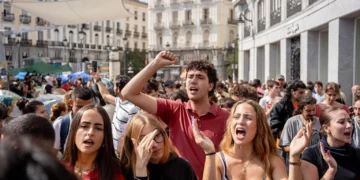
States still issue commands, but fewer believe in them—echoing Weber’s iron cage, where bureaucratic rationality hums on after charismatic legitimacy evaporates. Markets still move capital, but inspire little loyalty, their algorithmic flows indifferent to human ends. Experts still speak, but no longer settle disputes; their discourse fragments into echo chambers, per Foucault’s capillary power that permeates without a center. Even protest has lost its horizon; it erupts, circulates on platforms, dissolves into spectacle—Agamben’s homo sacer reduced to viral bare life, exposed yet ungovernable.


The problem is not disorder. It is a rule without legitimacy: sovereignty decoupled from myth, procedure persisting after belief withdraws.
Power operates mechanically in this void. Elections occur as ritual theater, but do not persuade—Schmitt’s decisionism inverted, where the sovereign exception becomes banal routine. Laws are enforced, but not respected; they govern bodies while hearts defect. Policies are announced, but not trusted; technocratic edicts from Davos or Brussels, hollowed by their own universalism.
Politics thus feels theatrical and empty: leaders perform decisiveness (the strongman tweet, the emergency decree) because they cannot command conviction. Citizens withdraw not from apathy, but disbelief—rational abstention in a game rigged by simulation. Participation feels inconsequential; exit, sovereign.
Technology accelerates this necrosis. Information travels faster than credibility; visibility outpaces judgment. Outrage circulates without resolution, the public sphere saturated with speech yet starved of settlement—Habermas’s ideal discourse drowned in Virilio’s speed of light politics.
“Polarization” misnames this: it is the absence of a shared referee, the neutral umpire unmasked as partisan fiction. Disagreement endures; what vanishes is the institution to close argument—Arendt’s common world eroded, leaving atomized monads.
In Europe, procedural democracy limps on without demos energy: empty cathedrals of law. In Africa, constitutional shells conceal patronage empires—Ghana now entangled in U.S. migration pacts to host deportees, cyber deals with the FBI, and visa bans that throttle outflows —multiparty rituals veiling Big Man sovereignty amid transactional realignments. In the global order, rules persist as zombie norms: Trump yanks America from Paris Agreement (again), rejecting multilateral climate pieties for fossil-fueled unilateralism; eyes Greenland outright, tariff threats enforcing Arctic dominance; unleashes ICE with warrantless entries, mass deportations (65,000+ detained, $170B war chest), naming the migrant-enemy. Enforcement fragments not from weakness, but audacious reassertion—authority devouring its own legitimacy to survive.
This yields no collapse, but drift: authority as background noise—resented, ignored, mocked, rarely obeyed from conviction. Normalization of the illegitimate.
History warns: such epochs resolve violently. Authority re-founds via myth (fascist cults, millenarian revivals) or yields to replacement—Schmittian foes who name the enemy plainly, shattering liberal ambiguity. Gentle reform? Illusion; the hollow state invites the sovereign pretender.
Societies face not crisis management, but a stark choice: reconstruct institutions that persuade through renewed mythos, or watch them supplanted by forces impatient with procedure—perhaps algorithmic caesars, ethno-nationalist vanguards, or networked insurrections.
Until then, the news churns: busy, urgent, void. The real crisis is authority’s undead reign.