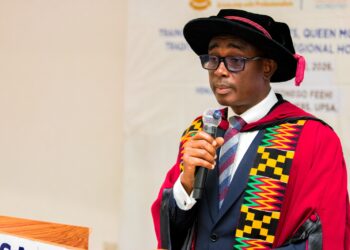

The Chancellor of Wisconsin International University College, Professor Paul Fynn, has expressed concern over the increasing cost of hostel accommodation facing university students in Ghana, particularly in private tertiary institutions.
According to Professor Fynn, the high cost of accommodation around universities is placing a heavy financial burden on students and parents, with some private hostels charging as much as GH¢10,000 to GH¢15,000 per semester.
Speaking on the issue, he revealed that hostel fees around Wisconsin University have become a major challenge for many students trying to balance tuition and accommodation costs.
“Private hostels around Wisconsin University charge GH¢10,000 per semester while some even charge GH¢15,000,” he stated.
Professor Fynn explained that the situation has become worrying because a substantial portion of students’ financial resources is spent on accommodation, leaving little money available for tuition and academic needs.
He noted that the growing cost of living and housing in urban centers continues to affect access to higher education, especially for students from low and middle-income families.
As part of measures to address the challenge, Professor Fynn suggested that government should establish a dedicated fund to support the construction of affordable hostels across universities in the country.
He argued that increased investment in student accommodation infrastructure would help reduce pressure on parents and improve access to tertiary education.
According to him, affordable accommodation remains critical to academic success and student welfare, adding that many students struggle financially because accommodation costs consume a large part of their educational budget.
Professor Fynn, however, pointed out that Wisconsin University itself offers relatively lower accommodation rates compared to some private hostel operators in the area.
He disclosed that “Place Line Wisconsin” charges about GH¢3,000 per semester, significantly lower than other private facilities operating around the university.
The Chancellor emphasized the need for broader collaboration between government, educational institutions, and private investors to address the accommodation deficit confronting students across the country.
He maintained that without urgent intervention, rising hostel fees could discourage many qualified students from pursuing higher education or completing their academic programs.