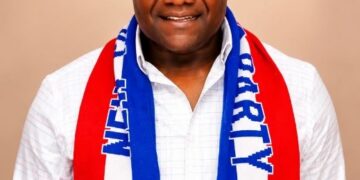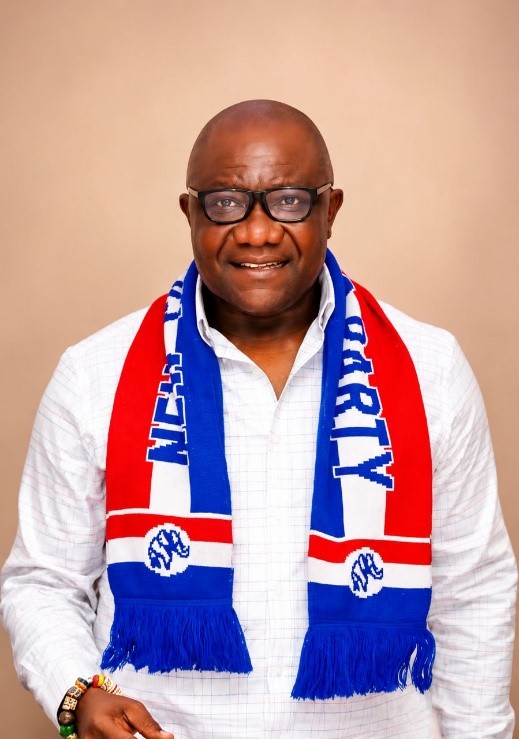

The newly elected Western Regional Chairman of the New Patriotic Party (NPP), Ignatius Kwasi Afrifa, has described the reported GH¢22 billion loss associated with Ghana’s Domestic Gold Purchase Programme (DGPP) as a major financial scandal requiring an independent investigation.
Mr Afrifa said the reported loss, equivalent to about US$1.7 billion, was too significant for the country to ignore and called for an independent probe to establish the circumstances surrounding the transactions and determine responsibility.
According to him, a development of such magnitude would have attracted intense political and public pressure if it had occurred under the previous NPP administration.
He argued that the then opposition National Democratic Congress (NDC), with Sammy Gyamfi serving as its Communications Officer, would have mobilised pressure groups, civil society organisations, religious leaders, the media and other stakeholders to demand answers from the government.
Mr Afrifa said he was therefore concerned about what he described as the relatively muted public reaction to the reported losses under the current administration.
He also accused sections of the media and other civil society actors of failing to subject the matter to the same level of scrutiny that characterised similar controversies under the previous administration.
Calls for independent investigation
Mr Afrifa said the reported US$1.7 billion loss identified by the International Monetary Fund (IMF) could not simply be dismissed and urged the government to support an independent investigation into the matter.
He said such an investigation should establish how the losses occurred, identify any wrongdoing and, where necessary, ensure that persons found culpable were held accountable.
In an interview with the Daily Statesman, Mr Afrifa further alleged, without providing evidence, that the funds involved could have been preserved for political purposes ahead of the 2028 general elections.
He said the accusations and exchanges between the government and the Minority over the matter had heightened public suspicion and made an independent investigation even more necessary.
“This is why an independent probe is necessary to unravel the hidden truth and retrieve the GH¢22 billion for the execution of development projects to enhance the standard of living of ordinary Ghanaians,” he said.
Mr Afrifa insisted that neither political attacks nor accusations directed at Minority Leader Alexander Afenyo-Markin and other NPP Members of Parliament would prevent the opposition from pursuing the matter.
He said the NPP remained committed to protecting the public purse and ensuring accountability in the management of taxpayers’ money.
NPP awaits government’s response
The Western Regional Chairman said the party was awaiting the government’s response to calls for an independent investigation before deciding on its next course of action.
He maintained that the scale of the reported loss demanded transparency and detailed explanations from the institutions responsible for implementing the Domestic Gold Purchase Programme.
Minority challenges GoldBod explanation
The controversy follows an IMF report which indicated that the Domestic Gold Purchase Programme, executed by the Ghana Gold Board (GoldBod) as the state’s gold-buying agent, generated losses of about US$1.7 billion in 2025.
The development has triggered a dispute between the Minority in Parliament and GoldBod over the responsibility for the reported losses.
The Minority, led by Mr Afenyo-Markin, has demanded explanations from GoldBod on the circumstances surrounding the losses and called for measures to prevent similar financial exposure in future transactions.
GoldBod Chief Executive Officer, Sammy Gyamfi, has, however, maintained that the reported loss does not appear in GoldBod’s books, pointing to the distinction between GoldBod’s own financial results and the wider financial position of the Domestic Gold Purchase Programme.
The Minority has rejected that explanation, arguing that the absence of the loss from GoldBod’s financial statements does not necessarily mean the losses did not arise from operations carried out through the programme.
The Minority has maintained that GoldBod, as the anchor of the Domestic Gold Purchase Programme and the state’s gold-buying agent, cannot simply distance itself from losses reported in connection with the programme.
It has also argued that GoldBod’s reported audited surplus of GH¢907 million from its operations and GH¢5.4 billion overall does not resolve questions surrounding the US$1.7 billion loss identified by the IMF.
The growing disagreement has intensified calls for greater transparency over the structure, accounting treatment and financial risks associated with the Domestic Gold Purchase Programme, with the opposition insisting that Ghanaians deserve a full account of how the reported losses were incurred.