By Bertha Demah
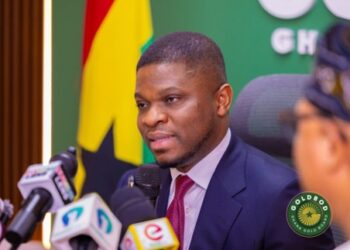
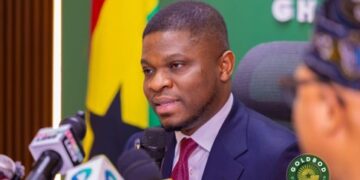
Deputy Minister for Works and Housing, Prince Hamid Armah, PhD, has argued that it would be more useful to vote for a Dr. Bawumia presidency, and that a second term for former president Johm Dramani Mahama to govern the country would be a tacit endorsement of mediocrity.
The Kwesimintim Member of Parliament (MP) in his latest scholarly analysis of the chances of two main contenders of the 7 December elections-New Patriotic Party(NPP’s) Dr. Mahamud Bawumia and the National Democratic Congress’s(NDC) John Dramani Mahama, ahead of the big day, posited that “voting for Mr. John Mahama’s return to power could be seen as endorsing mediocrity, given the numerous corruption scandals, economic mismanagement, and governance failures that occurred during his presidency from 2012 to 2016.”
Conversely, Dr Prince Armah is positive that Dr. Mahamudu Bawumia, who has never been president, offers the prospect of fresh leadership that focuses on economic modernisation, technological innovation, and fiscal responsibility.

“While Mr. Mahama’s tenure was marred by scandal and governance failures, Dr. Bawumia’s track record as Vice President suggests that he has the vision and capability to lead Ghana into a more prosperous and technologically advanced future. It is time for Ghana to look forward, not backward, and give Dr. Bawumia the opportunity to implement his vision for the country. Voting for Dr. Bawumia is not just a vote to break the typical eight-year electoral cycle in Ghana since 1992, but a vote for progress and accountability, with the potential for him to serve more than one term and deliver sustained leadership,” Dr. Armah stressed.
Former President Mahama’s first presidency, for instance, according to the chairman of the chairman of the manifesto committee on education for the Bawumia campaign, was marked by numerous high-profile corruption scandals that significantly undermined public confidence in his government, citing the Ghana Youth Employment and Entrepreneurial Development Agency (GYEEDA) scandal as one such case where millions of dollars meant for youth employment programmes were misappropriated.
“Contracts were awarded without due process, and many of the intended beneficiaries saw little to no improvement in their employment prospects. Similarly, the Savannah Accelerated Development Authority (SADA), established to develop the northern regions of Ghana, became a symbol of gross mismanagement. Funds allocated for reforestation and guinea fowl projects were wasted, with no tangible results, leaving the people of northern Ghana with unmet promises of development,” he added.
Read on, excerpts of Dr. Armah analysis:
Another significant embarrassment for Mr. Mahama’s administration was the Bus Branding Scandal, in which over GHc 3 million was spent on rebranding public buses with images of Ghanaian leaders. The inflated costs and lack of transparency surrounding the procurement process led to widespread public outrage, further tarnishing the credibility of Mr. Mahama’s government. These scandals were symptomatic of deeper issues within the administration, including weak institutional accountability and poor oversight of public funds.
The Brazil 2014 World Cup Scandal
One of the most glaring examples of financial mismanagement under Mr. Mahama’s presidency was the Brazil 2014 World Cup Scandal. Ghana’s participation in the tournament was overshadowed by the chaotic handling of player payments. In an unprecedented move, the government airlifted $3 million in cash to Brazil to settle appearance fees owed to the national football team, the Black Stars. The spectacle of flying cash across continents attracted global ridicule and raised questions about Ghana’s financial planning and governance. The incident not only damaged the country’s international reputation but also revealed the government’s inability to effectively manage even routine national matters without resorting to crisis-driven solutions.
The Energy Crisis (Dumsor)
Mr. Mahama’s presidency is perhaps most widely remembered for the energy crisis, commonly referred to as dumsor, which plagued the nation for several years. The frequent and prolonged power outages crippled businesses, led to widespread job losses, and severely disrupted the lives of ordinary Ghanaians. Although the roots of the crisis preceded Mr. Mahama’s tenure, his administration’s failure to resolve the issue in a timely manner was a source of immense frustration. The energy crisis revealed deeper issues of poor planning, underinvestment in critical infrastructure, and mismanagement of the energy sector. The economic toll of dumsor was significant, particularly for small and medium-sized enterprises (SMEs), which were forced to operate under severe constraints.
Economic Mismanagement and the IMF Bailout
One of the most consequential aspects of Mr. Mahama’s tenure was the state of the economy. Ghana’s debt levels soared under his administration due to excessive borrowing, particularly through the issuance of Eurobonds. However, the proceeds from these bonds were not effectively used for developmental projects, leading to increased debt without corresponding economic growth. The fiscal mismanagement culminated in Ghana seeking a bailout from the International Monetary Fund (IMF) in 2015. The IMF programme-imposed austerity measures, including cuts to public spending, which further strained the economy and led to widespread dissatisfaction among the population. Mr. Mahama’s inability to manage the economy effectively left Ghana in a precarious financial position, with rising inflation, currency depreciation, and declining investor confidence.
State of Public Enterprises
Several state projects and enterprises under Mr. Mahama’s government faced financial difficulties, further eroding public trust in his administration’s ability to deliver on its promises. Key sectors, such as agriculture and manufacturing, suffered from underinvestment and poor strategic planning, leading to slower economic growth and higher unemployment rates. These failures culminated in the formation of Unemployed Graduates Associations across the country, a stark reminder of the inefficacies of Mr. Mahama’s administration.
Dr. Bawumia: A Fresh Opportunity for Ghana
In contrast to Mr. John Mahama’s track record, Dr. Mahamudu Bawumia, the NPP’s presidential candidate, represents an opportunity for fresh leadership and a departure from the past. While Dr. Bawumia has not yet served as president, his role as Vice President has been marked by significant achievements in economic modernisation and governance reform. Dr. Bawumia’s leadership in the digitisation of public services is particularly noteworthy. His initiatives, including the implementation of the Ghana Card, mobile money interoperability, and the digital property address system, have improved transparency, enhanced financial inclusion, and reduced inefficiencies in government processes.
Dr. Bawumia’s economic expertise, particularly his focus on using technology to drive growth and streamline government operations, contrasts sharply with the corruption and inefficiency that characterised Mr. Mahama’s presidency. Dr. Bawumia has also been a key advocate for fiscal responsibility, and his policies are aimed at reducing waste, curbing corruption, and promoting accountability in public finance management. His vision for a digital economy offers the potential for sustainable growth and improved livelihoods for all Ghanaians.