By Accra Waste Journal | Independence Day Reflection
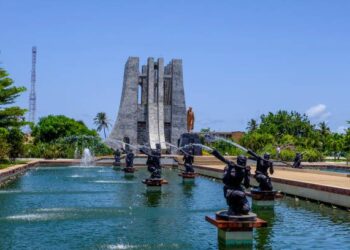
On 6 March 1957, a new flag rose over Ghana. The moment marked the end of colonial rule and the beginning of national self-direction. Crowds filled the streets of Accra. At midnight, Kwame Nkrumah announced that the nation was free.
Political freedom arrived in a single night. The building of a nation did not.
Independence is often celebrated through parades, speeches, and flags. Another story exists beneath those celebrations—the story of the city itself: its drains, its waste streams, its markets, its lagoons, its landfills. A nation may declare freedom in one hour, yet the physical life of its cities asks for discipline every day.


Look closely at the streets of Accra on any ordinary morning. The city wakes early. Traders arrange vegetables before sunrise. Trotros fill the roads. Mechanics open workshops. Food vendors light charcoal stoves. By mid-morning, the city has already produced thousands of kilograms of waste—organic matter, plastics, packaging, textiles, and metal scraps.
Waste reveals something deeper about independence. It shows how a society organizes itself once the celebration ends.
In earlier settlements across the country, waste followed a rhythm tied to land and season. Organic matter returned to farms. Palm fronds decomposed into soil. Clay pots broke and dissolved back into the earth. Communities understood the limits of their landscape because they lived inside those limits.
The arrival of industrial materials—especially plastics—changed that rhythm. Materials now remain in the environment long after their use. A plastic bag discarded in a market may travel through drains, settle in lagoons, and reach the ocean. What once returned to soil now lingers across decades.
During the colonial period, sanitation in many African cities served administrative convenience. Infrastructure was designed around small urban populations and segregated districts. Independence brought rapid urban growth. Migration from rural areas expanded cities faster than their planning systems. Accra today holds several times the population it carried at independence. The physical systems that manage waste—collection routes, treatment plants, engineered landfills—have struggled to keep pace.
The result is visible to everyone: clogged drains before the rains, plastic bags moving through gutters toward lagoons, markets overwhelmed by organic waste.
None of this is unique to Ghana. Across Africa, independence created political sovereignty while cities inherited weak municipal financing, limited data, and fragmented systems for waste handling. Yet the challenge has grown larger. Urban populations continue to expand. Consumption patterns change. Plastic packaging—almost unknown in the 1950s—now dominates the waste stream.
This Independence Day offers a useful question: What does freedom look like in the material life of a city?
A city that cannot manage its waste remains partially dependent. It depends on emergency clean-ups after floods. It depends on foreign donors for infrastructure studies. It depends on informal survival networks to recover materials that formal systems ignore.
Independence in sanitation means something different. It means a city that understands its own waste flows. It means accurate measurement of what enters markets, homes, and industries—and where those materials go after use. It means municipal authorities have the financial credibility to borrow and invest in treatment plants and recycling facilities. It means producers accepting responsibility for the packaging they introduce into the market.
In the early years of the republic, sanitation discussions rarely touched economics. Waste was seen mainly as a nuisance to be removed. Today it carries financial meaning. Plastic has commodity value. Organic waste can produce compost or biogas. Electronic waste contains recoverable metals. The modern waste sector operates less like a municipal service and more like an industrial supply chain.
Within Accra’s informal settlements and dumpsites, thousands of workers already understand this reality. Scavengers recover plastics, copper, aluminum, and glass long before official systems capture them. They represent an overlooked workforce in the national economy. Their labor reduces landfill pressure and feeds recycling markets.
Traditional markets also reveal a quiet logic of reuse. Worn baskets are repaired. Metal objects pass through the hands of artisans and mechanics. Food waste finds its way back into animal feed or soil. Materials move through cycles rather than disappearing at a single point of disposal.
Independence also demands that such workers move from the margins into structured economic roles. Recognition, safer working conditions, and integration into municipal systems would turn survival activity into a legitimate industry.
Another dimension of independence concerns the environment itself. The lagoons that cut through Accra once supported fisheries and wetlands. Decades of unmanaged discharge have altered these ecosystems. Restoration projects now attempt to repair what earlier neglect damaged.
A nation that controls its environment holds another form of sovereignty. Clean water bodies, protected wetlands, and functioning drainage networks are not luxuries. They determine public health, urban resilience, and climate readiness.
Rainfall patterns are shifting across West Africa. When storms arrive over Accra, the difference between minor flooding and urban disaster often lies in the condition of drains and waste management systems. Plastic waste blocking culverts has turned ordinary rains into destructive floods. Sanitation becomes climate policy.
This is why Independence Day should also belong to engineers, waste workers, recyclers, and city planners. Their work rarely appears in national speeches, yet it shapes the daily freedom of citizens. A child walking to school through clean streets experiences independence differently from one navigating flooded gutters.
The economic case grows stronger each year. Global investors now examine waste systems as infrastructure assets. Cities able to track waste volumes and material recovery attract financing for recycling plants, composting facilities, and energy recovery projects. Data becomes currency.
For Accra, the path forward rests on several simple actions practiced consistently. Measure waste flows. Strengthen municipal revenue systems. Support extended producer responsibility for plastics and packaging. Integrate informal recyclers into official value chains. Treat organic waste as an agricultural resource rather than a landfill burden.
Independence celebrations remind the nation of a single historical night in 1957. The quieter work that follows belongs to every generation. Cities evolve slowly. Drainage lines are laid meter by meter. Recycling plants take years to finance and construct. Public habits shift gradually.
Yet progress is visible when attention remains steady.
Walk through parts of Accra where community clean-ups occur regularly. Markets that once overflowed with refuse now organize waste points. Plastic collection networks begin to appear. Youth groups track neighborhood sanitation with mobile phones. Small interventions accumulate into urban change.
Political independence created the authority to make such decisions locally. The question has never been whether Ghana possesses the right to shape its future. That right arrived in 1957. The question is how consistently the nation applies that authority to the physical systems that sustain urban life.
A flag rising over Accra signaled the birth of a state. Clean rivers, functioning waste systems, and resilient cities signal something deeper: a society that governs itself in both politics and practice.
Independence continues, not as an annual ceremony, but as daily work in the streets, drains, landfills, and recycling yards of the capital.
The task remains unfinished.
**“Kɛji lɛ ni kɛji lɛ; shikpɔŋ lɛ ni shikpɔŋ lɛ.”**
*(Every place has its order; every community has its responsibility.)*