

By Richard DABLAH
There is a silence that lingers louder than any sermon—the kind that hovers in gilded
sanctuaries while justice crumbles outside the stained-glass windows. It is the silence of the
Ghanaian church, perched atop centuries of moral authority, yet now caught in the collapse of a
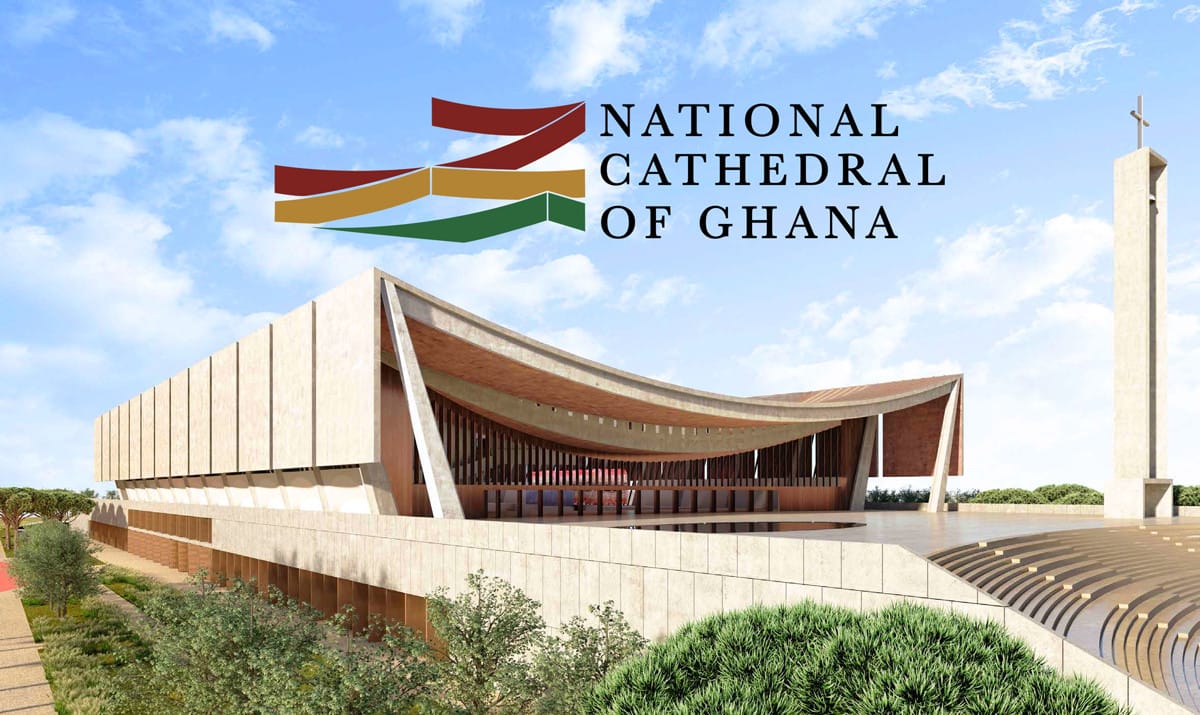
Cathedral it helped bless into being. The story of the National Cathedral is not just about
vanished millions or unbuilt monuments; it is the latest chapter in a longer tale of religious
sanctimony shielding political rot, where those who should have been prophets became palace
courtiers. This is a narrative of a people who once wept in prayer, danced in praise, and tithed in
trust, believing their shepherds were holy. Yet, as the years passed and their lives remained
barren, they looked up—and found their church leaders seated beside thieves. Welcome to
Ghana, where God is monetized, pulpits are privatized, and holiness has become a highly
profitable enterprise. The pit that lies on prime Accra soil is not merely the ruins of a failed
project; it is a monument to hypocrisy, a graveyard of national trust that was meant to be a
temple of unity, built with public funds and supervised by men of God.
I. The Holy Empire of Respectability and Its Fall
From colonial chapels to post-independence pews, the Ghanaian church has long worn the robe
of national conscience. It was once the moral check on excess, the educator of minds, the
healer of the sick, and the heartbeat of communities. However, over time, the pulpit grew closer
to power—and began to envy it. Clergy were no longer content to anoint kings; they began to
dine with them, advise them, defend them, and in some cases, become them. This historical
trajectory reveals a profound shift: from a spiritual institution rooted in community welfare to one
increasingly entangled with political and economic ambitions.
Today, the modern church is a labyrinth of mega-auditoriums, wealth gospel, political
endorsements, and silent complicity. The Pentecostal surge of the 1990s, rather than fostering
deeper theology, reshaped the landscape with entrepreneurial charisma. Salvation became a
subscription, and holiness, a hustle. When President Akufo-Addo declared the National
Cathedral his personal vow to God, the church did not challenge him on the blurring of personal
piety and public funds. Instead, it stood by—then joined the board, took up positions of prestige,
and opened the vault of divine justification. This complicity, however, is not a recent
phenomenon. The Ghanaian church, much like many across Africa, is a colonial transplant—a
moral arm of empire, historically deployed to suppress native resistance and sanctify foreign
control. Missionaries baptized bodies while colonial officers stole land; they translated the Bible
into Twi while banning African drums. This legacy never truly ended; it merely changed
wardrobe. Today’s mega-pastors, with their gold rings gleaming and robes flowing, are not so
different from their colonial chaplain predecessors. Both were, and are, deployed to maintain
order among the restless poor, offering spiritual sedation in place of social justice, trading
eternal life for temporary silence. “Your reward is in heaven,” they preach—while theirs is,
demonstrably, in Swiss accounts. They have systematically taught generations to bow instead of
rise, to give instead of organize, and to pray instead of protest, culminating in their current
stance beside a pit that was meant to be the Lord’s house—but instead became a graveyard of
national trust.
II. The Sacred Heist: Anatomy of a Scandal
It is staggering that over $97 million of public funds were spent on a building without a roof, and
none of the trusted clergy at the heart of the project rang the bell of alarm. The question echoes:
Where were the prophets? The moral guardians? The shepherds of truth? This was not an act
of naïveté; it was institutional complicity. A generation of Ghanaian clergy, nurtured in
seminaries of conservative obedience, have become reluctant to challenge Caesar when
Caesar speaks in tongues. The promise of legacy, proximity to power, and a carved name on a
plaque silenced the very people who should have been sounding the trumpet of accountability.
The National Cathedral scandal, far from being an isolated failure, is the unveiling of an entire
ecosystem—a spiritual-industrial complex where bishops, prophets, and pastors have
transformed into financial operatives, adept at laundering the sins of the state through the
language of scripture. They were not merely involved; they were architects of silence, co-signers
of plunder, and willing beneficiaries of public deception. These were not victims of political
manipulation, but rather co-conspirators cloaked in cassocks. Let’s be unequivocally clear:
many of Ghana’s most prominent clergy were compensated—not solely in cash, but in
invaluable access, influence, and prestige. They became brand ambassadors for a Cathedral
that never rose, yet whose gaping pit devoured almost 100 million dollars. And when the nation
dared to ask about the vanished funds, they merely looked away and quoted the Psalms. This,
unequivocally, is not a mistake; it is a sacred heist.
Furthermore, the stark irony of this scandal cannot be overstated: it centers around a temple to
the Christian God, built in a country where public hospitals lack beds, where schoolchildren still
learn under trees, and where sanitation remains a national emergency. How did the church
become so profoundly convinced that a monument to itself was more urgent than acts of mercy
and genuine public service? The record of this project is damning, revealing:
● No competitive bidding for contracts, suggesting a deliberate circumvention of fair
process.
● Funds diverted without parliamentary approval, a clear breach of public trust and
financial governance.
● No published reports from the clergy-led Board of Trustees, indicating a severe lack of
transparency and accountability.
● A sole-sourced architectural firm owned by Sir David Adjaye, who now faces grave
sexual misconduct allegations, further tainting the project’s already dubious foundations.
While public hospitals cry for beds and rural schools crumble, we are told this wasteland is a
“national vow”? A vow to whom? Certainly not to the suffering people of Ghana. Not to truth.
Perhaps, then, to ego. Or, more likely, to Mammon.
III. The Gospel According to Greed: A Theology of Complicity
This phenomenon is far from an anomaly. Across the globe, sacred spaces have historically
been co-opted to launder the legitimacy of states and strongmen. From the Vatican banking for
mafias to Brazilian bishops building political empires and American evangelicals selling prayer
for campaign dollars, the pattern is disturbingly consistent. Ghana, like many postcolonial
nations, has inherited the worst of both worlds: an imperial religious structure intertwined with
neo-colonial extractive politics. In this toxic blend, churches have morphed into cultural
monopolies, preaching obedience in exchange for peace, hope in exchange for truth, and
prosperity in exchange for silence. Religious capital is shrewdly traded for political protection,
while the congregation, often impoverished, dances at night vigils for breakthroughs, oblivious to
the elites breaking into national coffers.
What, then, does it signify when the very house of God becomes a crime scene? Not of blood,
but of a profound betrayal—of trust, transparency, and truth. The National Cathedral, once
envisioned as a symbol of unity, gratitude, and national reverence, now stands as a gaping pit in
the ground, a stark metaphor for the moral excavation of the Ghanaian church itself. The true
indictment lies not merely in the project’s failure, but in the fact that it was never questioned. For
years, the church has been weaponized to de-radicalize the poor, teaching that suffering is
sacred, submission is faith, and reward is deferred until after death. This theology is, predictably,
beloved by the state, as it produces docile citizens, hopeful voters, and pacified masses. What it
conspicuously fails to produce, however, is resistance or justice.
Let’s speak plainly: religion in Ghana has become its most protected cartel. It operates largely
tax-exempt, above scrutiny, and immune to audits. Churches, while registered as NGOs,
behave with the impunity and ambition of corporations. Many own schools but charge exorbitant
fees, run banks but hoard wealth, and construct sprawling auditoriums while surrounding
communities languish in poverty. Where, one must ask, is the trail of the tithes? Where are the
offerings truly invested? What tangible percentage of church revenue actually reaches the
hungry, the homeless, the hopeless?
The church has effectively become a parallel state—commanding more loyalty than Parliament,
wielding greater visibility than political parties, and enjoying more impunity than even the police.
Worse still, it controls the moral narrative. If a politician is caught in corruption, the public often
waits for the pastor to respond. If a girl is raped, the church offers prayers but rarely legal aid.
And when LGBTQ+ persons exist, pastors readily unite with politicians to scapegoat them,
conveniently distracting the populace from the very corruption they refuse to confront. They
have become moral cowards and strategic opportunists—speaking out only when it is safe, and
never when it is truly just.
The real scandal transcends mere fiscal impropriety; it is the theological deception that made
such plunder possible. Clergy have weaponized faith to legitimize theft, using their pulpits to
elevate politicians who bestow upon them gifts, lands, or honorary degrees. We have, tragically,
created a generation of pastors who do not pastor—they brand, they monetize, they manage
audiences. They perform miracles but never question policies. They cry over spiritual attacks
but whisper in the face of injustice. They call themselves “men of God” but behave,
unequivocally, like men of the regime. One is left to ponder: What would Jesus do? He flipped
tables. Today’s pastors, it seems, merely collect them.
IV. A Reckoning and a Call for a New Faith
The Ghanaian church now faces an unavoidable reckoning. This is not solely about its direct
involvement in the Cathedral scandal, but a broader indictment of its pervasive failure to live up
to its spiritual duty. Where, indeed, was the church when galamsey ravaged forests while
politicians claimed to pray, or when corruption became normalized and youth unemployment
soared? The uncomfortable truth is that many churches remained either silent or selectively
outraged—issuing press statements only when convenient, but rarely disrupting the oppressive
status quo. The gospel of the suffering Christ, once a beacon of hope and resistance, has been
tragically replaced by a gospel of comfort, class, and compliance. If a church consistently fails to
speak truth to power, can it still be considered a church—or has it devolved into nothing more
than a stage for performative piety?
If Ghana is to truly heal from this deep wound, the church must be interrogated—not merely
spiritually, but institutionally. We must demand answers to critical questions: Who authorized the
release of state funds to the Cathedral without proper oversight? What financial benefits did
each clergyman on the board receive? Why did none of them resign when the scandal broke,
and what have their churches genuinely contributed to national development that justifies their
tax-free status? Let there be a public audit of the Cathedral project and its trustees. Let
churches be compelled to publish their budgets, their giving, and their governance structures.
Enough with the holy theatre. God, as scripture reminds us, does not dwell in corruption. And
the people of Ghana, having witnessed this betrayal, are no longer blind.
It is time to resurrect a resistance theology—one that actively walks with the poor, speaks truth
to power without equivocation, and resolutely refuses to dine with the kings of this world. Ghana
desperately needs clergy who are prepared to lose status to gain justice, who will courageously
denounce presidents from the pulpit, rather than inviting them to sit in the front row. We do not
need another cathedral. What we need, with urgent clarity, is conscience, courage, and a
profound cleansing. The time for prophets, not profiteers, is now.
Final Benediction (of Truth)
Let the pit remain. Let it serve as an enduring, gaping wound in the landscape, a constant
reminder that when religion becomes power-hungry, when it prioritizes Mammon over mercy, it
inevitably digs its own grave. As the ancient text warns, “Woe unto you, scribes and Pharisees,
hypocrites! For ye are like unto whitewashed tombs, which indeed appear beautiful outward, but
are within full of dead men’s bones…” — Matthew 23:27. The Ghanaian church, standing at this
tomb’s edge, faces a stark choice. It can choose genuine repentance, not merely in ritual, but in
public action and institutional reform. Or, it can be buried by its own unholy silence, by the
weight of its complicity and the stench of its betrayal. The people are watching. God is not
mocked. And history, with its unyielding gaze, has already begun its judgment.

The Gospel According to Greed: How the Ghanaian Church Became an Accomplice to the National Betrayal

Related Posts





Leave a Reply




ADVERTISEMENT

The New Crusading Guide is a privately own newspaper in Ghana with Mr ABdul Malik Kweku Baako as its Editor in Chief. We give you the latest news