Public debt arises when a government spends more than it collects as total revenue and has to borrow to close the gap.
In practice, government budgets which capture their spending plans as well as revenue expectations are done on yearly basis, but they must reflect expenditures or commitment from the past.
As a result, when a previous government overspends, it must be carried on by a new government as arrears – which is well captured by the adage Government is a continuum.

It is this practice that bequeath to President Akufo-Addo a substantial arrears owed to contractors and other government service providers in excess of GHS11 billion, energy sector pays or take contract commitments of over GHS6 billion a year, and a financial sector toxic asset which were sitting with failed financial institutions in excess of GHS21 billion.
Also, Government was borrowing heavily at the short-term end of the treasury market at average interest above 20%.
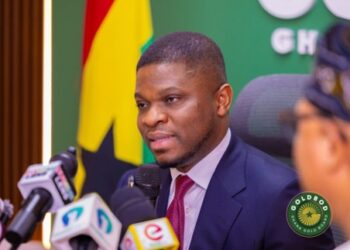
Simply, this means with Ghana’s tight fiscal space Ken Ofori-Atta must look to borrow to pay these legacy debts, pay high interest payment cost and still find space to borrow to meet its annual budget funding gap.
This was the state of finances that the Akufo-Addo led Government had to turnaround in four year.
It is within this difficult context that the success of Ken’s stewardship in containing the public debt and passing a fiscal responsibility act must be analysed.
The public debt stock as at the end of November 2020 GH¢286.9 billion, representing 74.4% of Gross Domestic Product (GDP).
The public debt stock was GH¢122.6 billion as at the end of 2016.
Between 2012 and 2016 total public debt more than tripled from GH₵36bn ($8.6bn) to GH₵122.6bn ($29.3bn).
As a share of GDP it rose from 47.8% to 72.5% over the period.
On a weekly basis, about GH₵1billion of already contracted domestic debt was maturing.
In fact, that means about GH₵4 billion of domestic debt matures per month at a time when the country’s tax revenue per month is just about an average of GH₵2.2 billion.
This then meant that Ghana has a problem of refinancing this maturity.
The situation was so bad that for the first time in Sub-Saharan Africa, Ghana obtained a World Bank Partial Risk Guarantee (PRG) to issue the Eurobond in 2015, mainly to refinance short-term domestic debt.
The total projected fiscal expenditure for the 2016 was GH₵43.9 billion representing 26% of the GDP; but it rather exceeded the target spending GH₵50.3 billion representing 30.2% of the GDP.
A report, jointly published by seven organisations that constitutes Jubilee Debt Campaign in 2016, revealed that Ghana is in a debt crisis because the country is losing around 30% of government revenue in external debt payments each year.
It attributed the situation to a combination of the fall in the price of commodities and the loans not being used well enough to ensure they could be repaid.
The authors said such huge payments are only possible because Ghana has been able to take on more loans from institutions, such as the International Monetary Fund (IMF), which are used to pay the interest on debts to previous lenders, whilst the overall size of the debt increases.
According to the Jubilee Debt Campaign report, the situation is expected to stay well above 20% of revenue until, at least, 2035.
Faced with this situation upon assumption of office by the Nana Akufo-Addo led New Patriotic Part (NPP) government, Mr Ken Ofori-Atta announced a debt re-profiling agenda and Ghana issued the first 15-year bond in April and also issued a second 7-year bond.
Provisional interest savings arising from Government’s implementation of the liability management programme by re-profiling domestic debt is estimated at GH₵612 million for 2017.
This re-profiling will not add to the debt stock by year-end but rather replaces existing debt as per the gross financing requirements and has lowered the rate of debt accumulation.
The interest paid on Ghana’s debt was over GH₵14 billion in 2016 when the National Democratic Congress (NDC) government exited power.
Between 2017 and 2020, Ghana has paid over GH₵80 billion as interest on the public debt.
Interest cost on these debts had increased from GHC9.6 billion to GHc14.9 billion in 2017.
The public debt stock as at the end of 2018 hit GH₵173.2 billion or $35.92 billion
In 2018, of the GH₵37.8 billion raised in tax revenues, GH₵21.1 billion was used to service interest payments alone.
This means that Ghana was spending close to 55% of tax revenue to service interests on loans alone.
In 2019, interest payments cost the nation about GH₵19.756 billion on loans borrowed.
For the year 2020, Ghana is expected to pay about GH₵24 billion on interest payments.
Data shows that Ghana’s revenues are consumed by wages and salaries, interest payments on amortisation and statutory payments thus, accounting for 99.6% of government revenues.
Over the past four years, the Government worked assiduously to propel the economy to a higher growth path to sustain the development agenda of a Ghana Beyond Aid, while also making every effort to consolidate the gains made in the area of macroeconomic stability.
While doing that an asset quality review carried out by the Bank of Ghana (BoG) in 2015 and 2016 revealed severe challenges with solvency, liquidity and asset quality in Ghana’s banking industry, with some banks showing significant under-provisioning and capital shortfalls.
A regulatory crackdown on poor business practices and weak capital positions in Ghana’s banking sector has resulted in a series of market exits since August 2017.
The outcome is a smaller but more sustainable banking industry, though this has come at a price.
Mr Ofori-Atta has borrowed GH₵21.6 billion to pay for the banking sector clean up to save a collapsing financial sector and protected 4.6 million depositors and 81,700 investors.
This also added to the debt stock.
In the four years of governance the government also paid GH¢12 billion in excess energy capacity charges inherited in 2017, and has kept the lights on.
It also settled substantial part of the GH¢11 billion outstanding arrears bequeathed to it.
The Finance Minister was also faced with funding for the implementation of the Free Senior High School Policy among other 15 flagship programmes imitated by the government.
Presenting expenditure on Appropriation for January 1, 2020, to March 31, 2021 to Parliament, Mr Ofori-Atta announced that government has invested in excess of GH¢15.7 billion into key flagship programmes.
“These flagship programmes have created the platform for real economic transformation; strengthening human capital through enhancing access to health care, education and skills development, modernizing agriculture and industry, delivering infrastructure across the country – including a revitalised railway sub-sector – and creating jobs,” he said
With higher expectations to bring the debt under control, then COVID-19 emerged.
Analysts attributes the increasing cost of servicing the national debt in recent times to the shock occasioned by the Coronavirus disease (COVID-19), which has caused revenues to fall substantially.
The debt service cost, which refers to the payment of due portions of loans (amortisation) and the interest, remained high, resulting in a higher ratio when debt service cost was compared with total revenue.
The Ministry of Finance rolled out a number of solutions to help reverse the trend and reduce its impact on the economy.
The measures include the use of low-cost debts to retire comparatively costly ones, the development of a robust domestic debt market to create space for low-cost debts and an increased resort to bilateral and multilateral sources for loans.
The government’s debt management strategy includes borrowing at least cost and at a prudent level of risk.
This is consistent with the liability management strategy, where new debts were secured at cheaper costs to replace cheaper ones.
COVID-19’s temporary reduction in revenue is a one-off increased expenditure to save lives and livelihoods and a temporary reduction in GDP.
The prospects for debt sustainability are also given hope by the structuring of the GH¢100 billion Ghana Coronavirus Alleviation & Revitalisation of Enterprises Support (CARES) programme.
Government spending has a direct impact on the rate of economic advancement.
The need to better the lots of citizens through government expenditure in the midst of dwindling revenues means government has to borrow and use the money well for a better future
The scarcity of resources and reduced financial capacity requires the mobilization of resources, through active expansionary fiscal policy to reduce domestic and/or external debt.