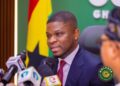
Former Ghanaian MP and journalist Ras Mubarak has hailed the political changes in Burkina Faso as a powerful symbol of Africa’s awakening—one that marks a rebirth rather than a rebellion.
Speaking to African students at Istanbul’s Ibn Haldun University on African Union Day, Mubarak described the Sahel’s recent political wave as a clear sign of rising self-determination across the continent.
“This Sahelian wave is not instability—it is clarity. It is not a rebellion; it is a rebirth,” he declared, receiving enthusiastic applause.
Mubarak pointed to Burkina Faso’s young military leader, Captain Ibrahim Traoré, as a bold figure challenging the legacy of failed post-independence governance.
“Traoré wasn’t elected, but he’s confronting the wreckage of decades of hollow democracy. He uses power to serve—not to submit.”
He argued that countries like Burkina Faso, Mali, and Niger are reclaiming sovereignty by rejecting foreign military bases, unfair trade deals, and debt-driven policies pushed by Western institutions.
“For years, they were told foreign troops and endless borrowing would save them. Today, a new generation of leaders is breaking that cycle.”
Mubarak emphasized that real change won’t come from Western endorsement, but from courageous African leadership rooted in dignity and self-reliance.
“Africa’s transformation won’t come with a nod from Paris or Washington. It’ll come from a generation ready to lead without permission.”
While not rejecting democracy, Mubarak insisted it must be reimagined to serve Africans, not just uphold elections.
“Democracy must bring dignity and independence—not just regular voting rituals.”
He criticized the failure of regional integration projects like ECOWAS’s long-promised single currency, blaming foreign-aligned leadership for stalling progress.
“I was a teenager when we started talking about the Eco. I’ll be 46 next month—we’re still talking.”
Urging young Africans, especially those abroad, to become active leaders, Mubarak said:

“You are not the leaders of tomorrow—you are the leaders of now. If you don’t lead, others will continue to mislead.”
He condemned colonial-era systems that hinder intra-African trade and movement, calling current visa regimes and trade routes relics of colonial exploitation.
“It’s absurd that goods from Ghana must pass through Europe to reach Liberia. What’s the point of African unity if we can’t move freely?”
Mubarak also encouraged building alliances with the Global South—nations more inclined to treat Africa as equal partners.
“It’s time to look East—to China, Russia, Brazil—where cooperation isn’t a disguise for control.”
Closing his speech, Mubarak denounced Israeli aggression in Palestine, urging African solidarity based on shared histories of oppression.
“As people who’ve endured slavery and colonialism, Africans should understand the plight of Palestinians. Israel is a gangster terrorist state—its leaders must face justice.”
In a rousing final message, Mubarak called on young Africans to channel the spirit of revolutionaries past.